Priscila’s Sneakers: A Bridge Between Two Worlds
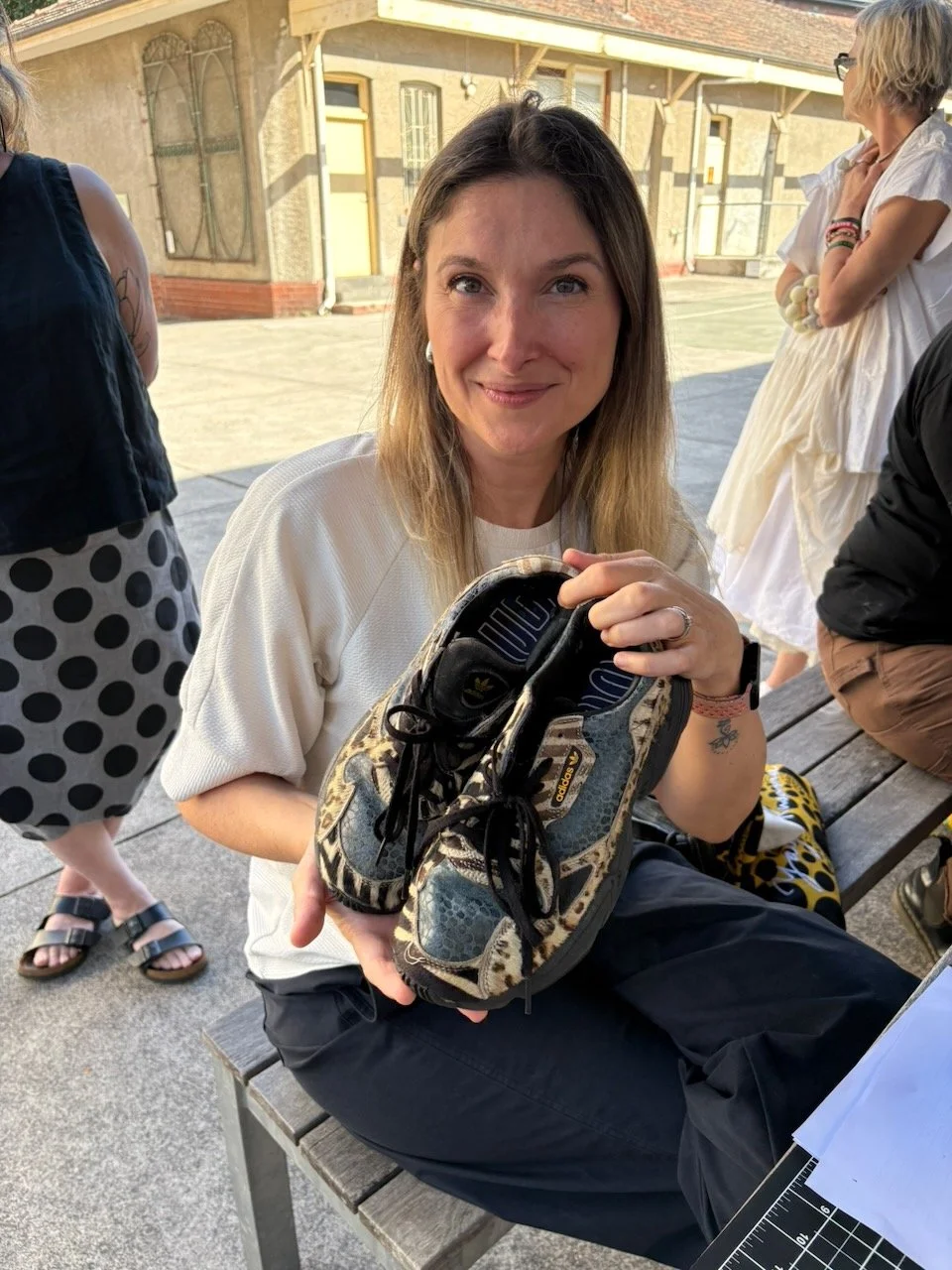
Priscila Winckler with her 2019 Adidas Falcon ‘Out Loud’ sneakers at the ‘This is Not a Shoe’ Workshop. Abbotsford Convent. Image: Alex Sherlock, 2026
What is the origin of your shoes?
These are Adidas sneakers, and they came into my life just as I moved to Australia, specifically Melbourne. I’m a footwear designer, and at that moment, it was the very first time in many years that I wasn’t working full-time for a major fashion brand. I had become a mother the year before, had to quit my job to move countries, and shifted from a fast-paced, fashion-driven city like Bangkok, with offices, collections, and constant travel, to a quieter rhythm. My days changed from international research trips and busy studios to park walks with a toddler, early nights, and a city where fashion feels more practical and understated. These shoes became a bridge between those two worlds. They grounded me in this new life while also maintaining a connection to who I was before. Wearing them felt like a way of carrying my identity with me, a small, everyday reminder that even as everything around me was changing, I didn’t have to lose myself.
What have they done?
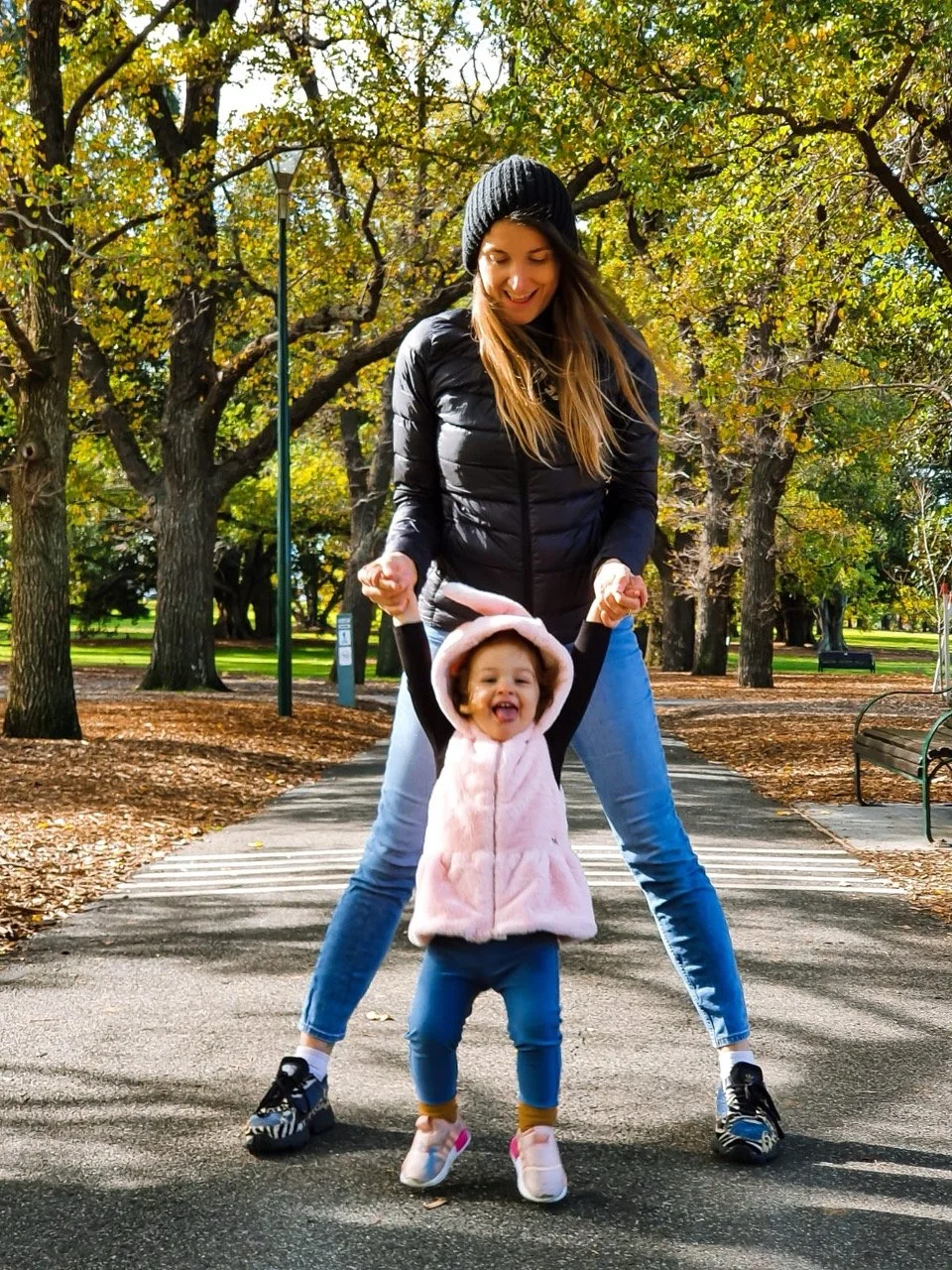
These shoes accompanied me on daily walks with my child, mostly through parks and green spaces. Later, during COVID, they also became my shoes for long solo walks, as being outdoors was one of the few things that felt grounding. Finding a piece of wood still lodged in the outsole during the workshop made me realise how much time they had actually spent in nature, and how closely they’re tied to that period of my life.
What do they signify?
They represent a period of transition and discovery. The bold colours and materials reflect personality, and the familiar shape reminds me of a time when I was moving countries, changing jobs, and leaving behind a life I loved to create a new one. They carry memories of adaptation, movement, and learning who I was in a different context.
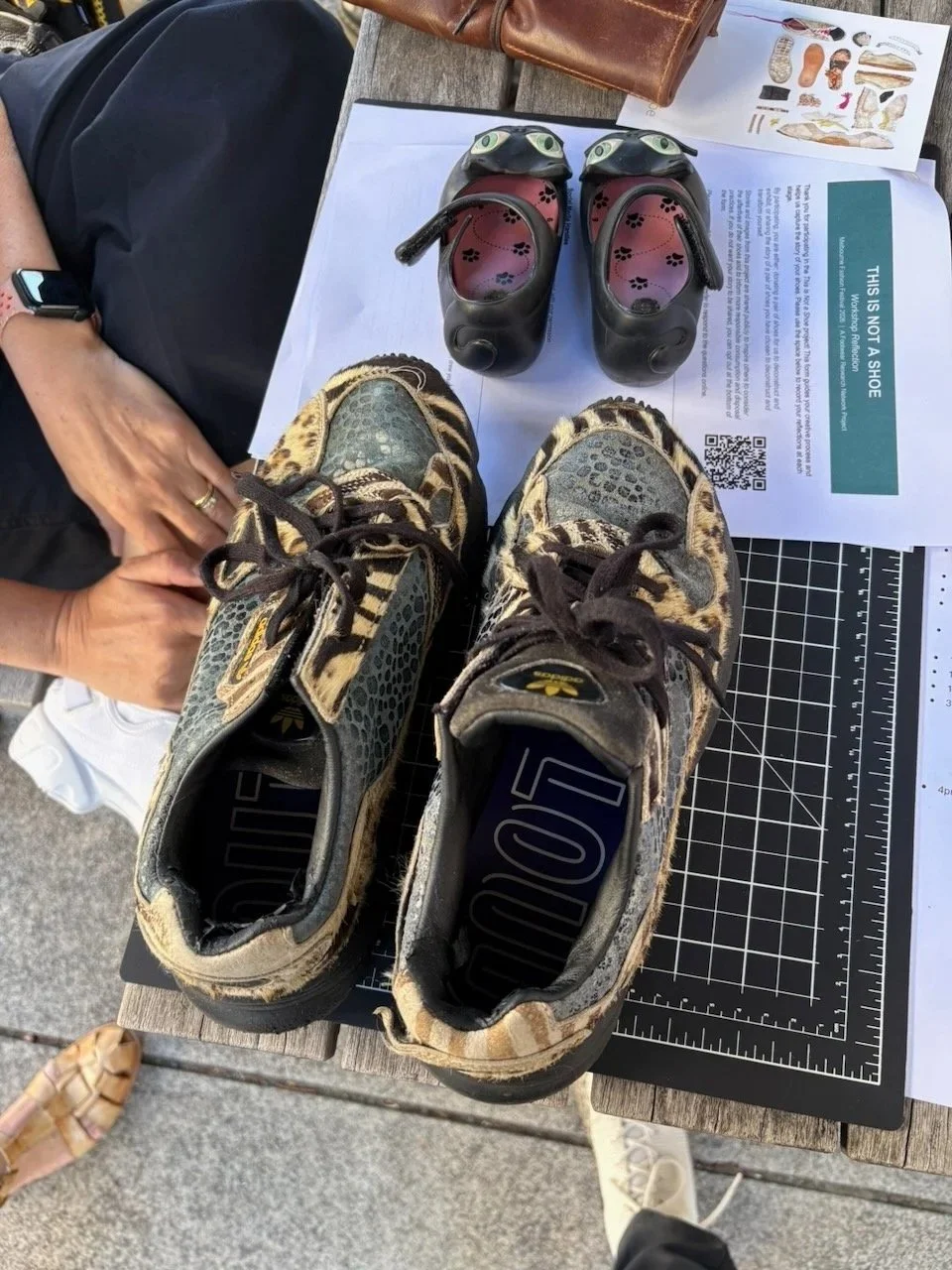
Priscila’s 2019 Adidas Falcon ‘Out Loud’ sneakers next to a pair of infant shoes designed by Priscila for Melissa and later worn by her daughter. A group vote determined which to deconstruct! Image: Alex Sherlock, 2026.
What did/do you love about them?
I love the mix of bold colours, prints, and materials. I also love the super comfortable outsole shape, which helped me run after my little human. When you have a small child, there’s not much time to dress up, and you end up wearing a kind of everyday uniform. These shoes did the work I couldn’t put into my clothes; they added personality and intention when everything else had to be simple and practical.
Is there anything you dislike about them?
The synthetic lining began to detach over time. It affected the comfort and made me more aware of the material’s limitations.
What do you think would happen to them if you didn't give them a second life? How would you feel about this fate?
I think they could still be repaired and donated, even though the lining was beginning to fall apart. But letting them go feels difficult, because they’ve become a symbol of resistance, holding memories and many significant moments from my life.
Why do you want to deconstruct and/or transform these shoes?
I still want them in my life for everything they’ve been part of and what they represent. They’ve been sitting in a box because I wasn’t ready to let them go. Now I understand why. Transforming them allows me to keep what matters, without holding onto them in their original form. As a designer, I’m aware of the resources and labour that go into every product. Discarding something simply because its first function has ended reflects the linear model, driving overconsumption and harming nature. Reworking these shoes is a small but intentional act of circular thinking. It extends their life and reduces the need to produce something new from virgin raw materials. I believe more of us should do this. If we choose to transform rather than replace, we could meaningfully reduce waste and shift toward a more responsible way of living.
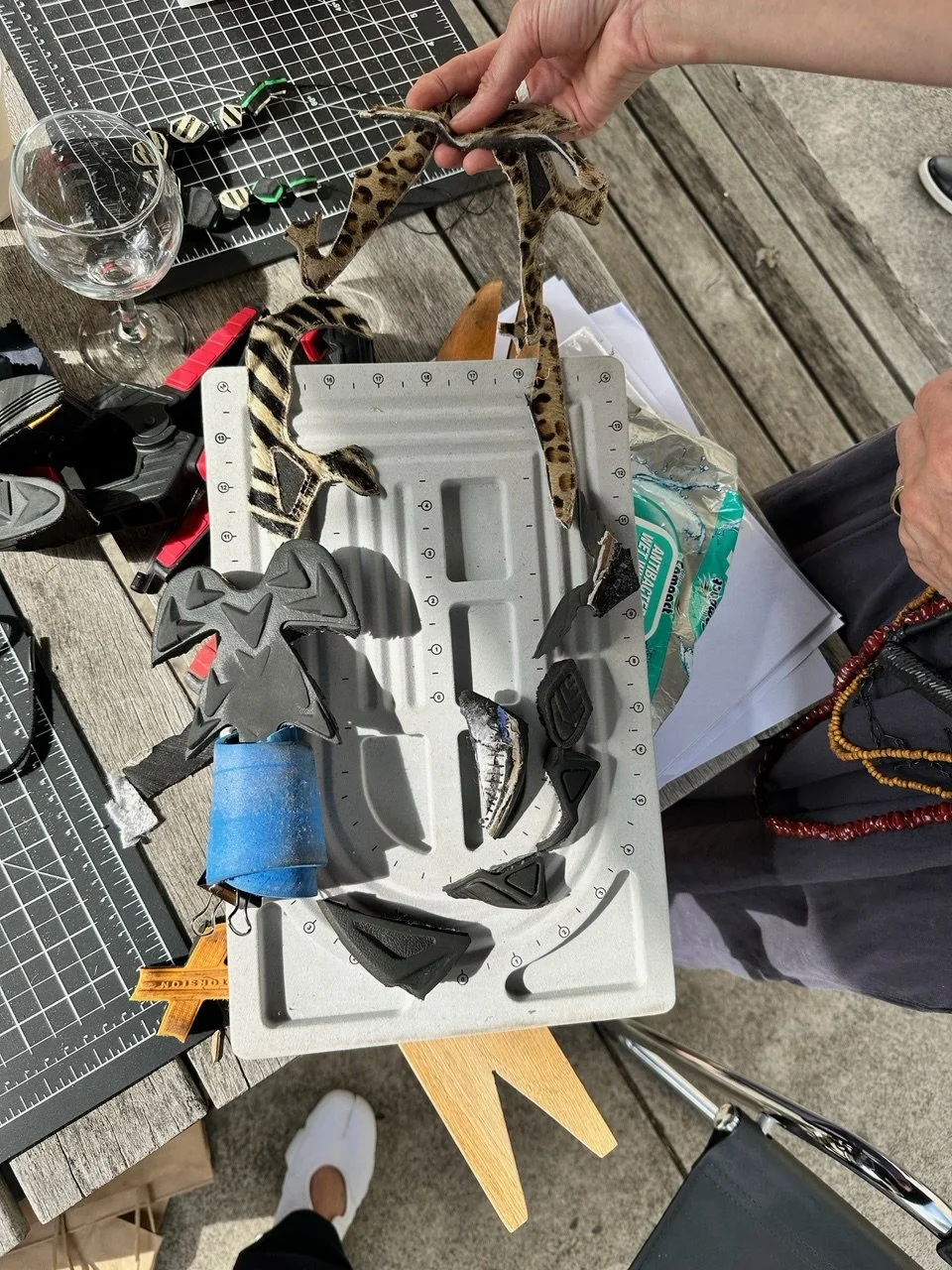
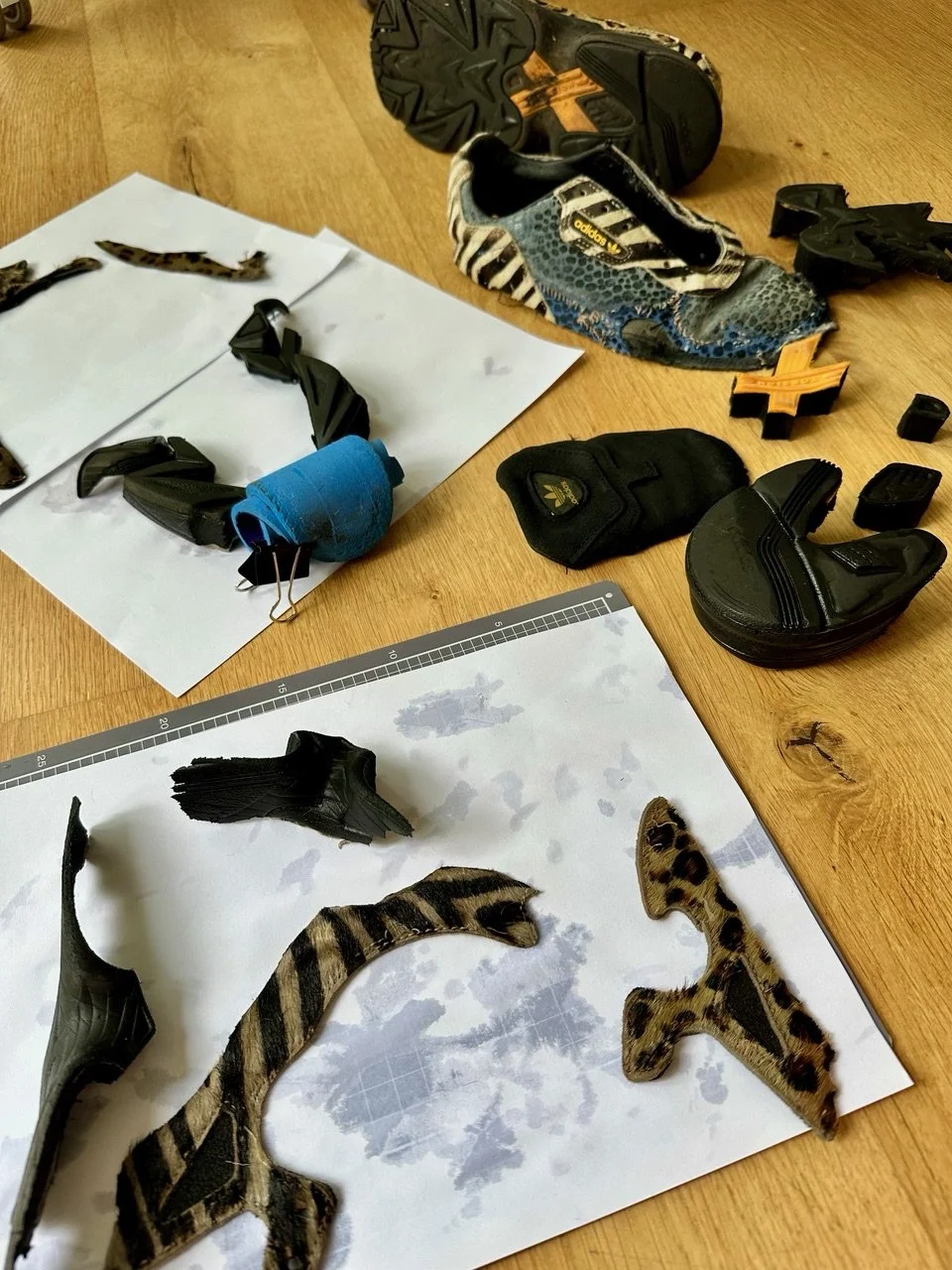
What did you make from your shoes, and were there any materials left over?
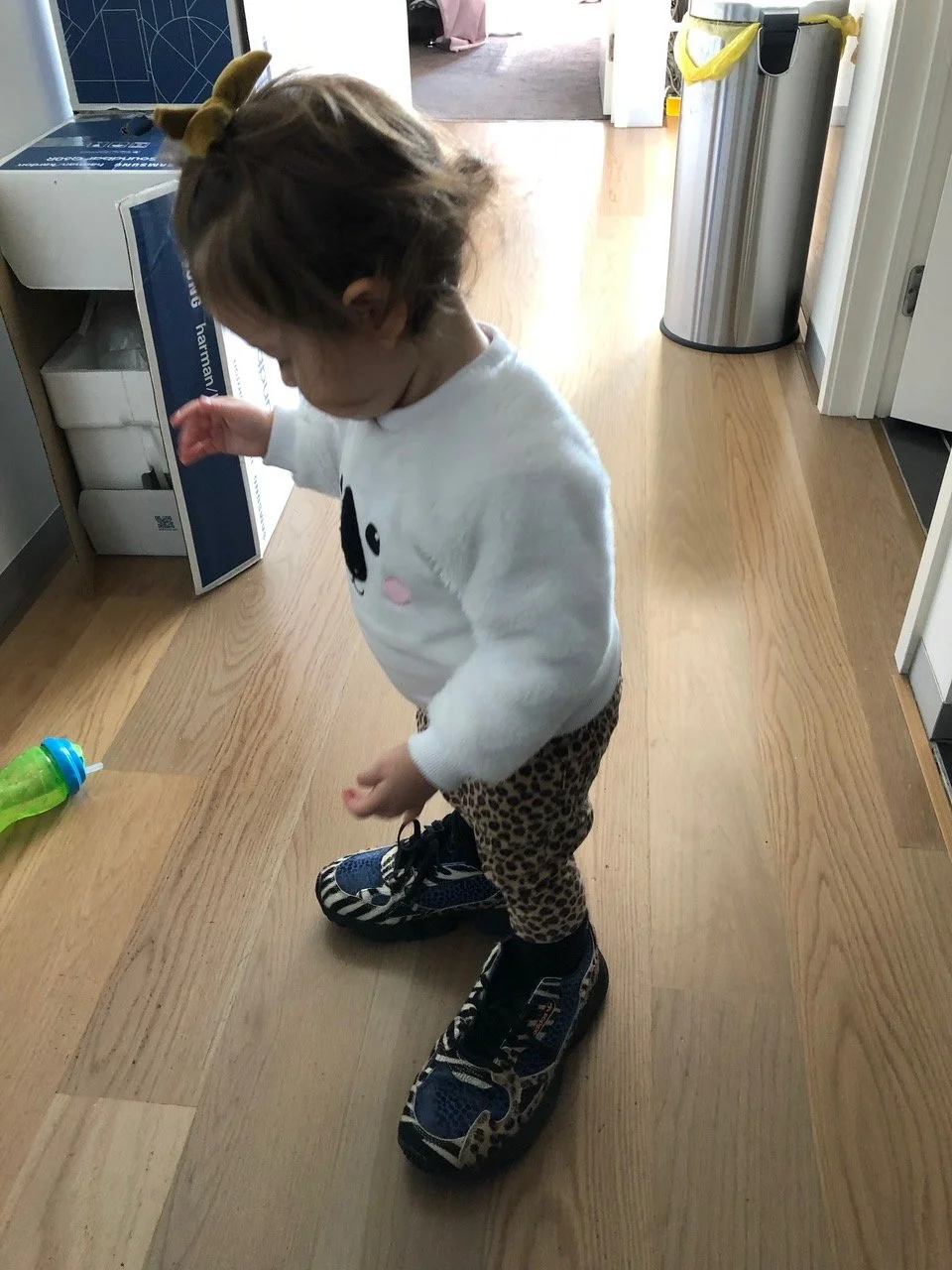
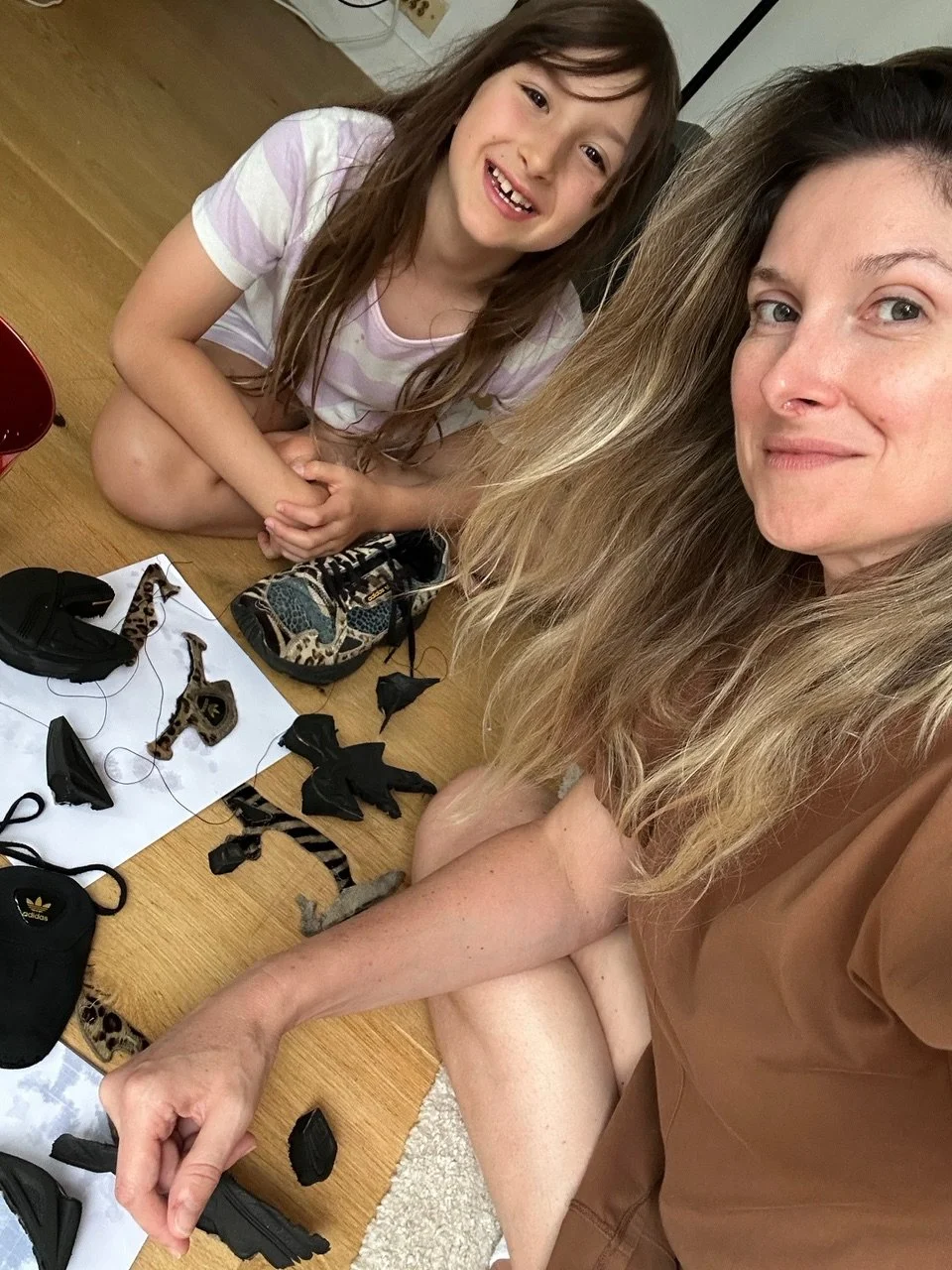
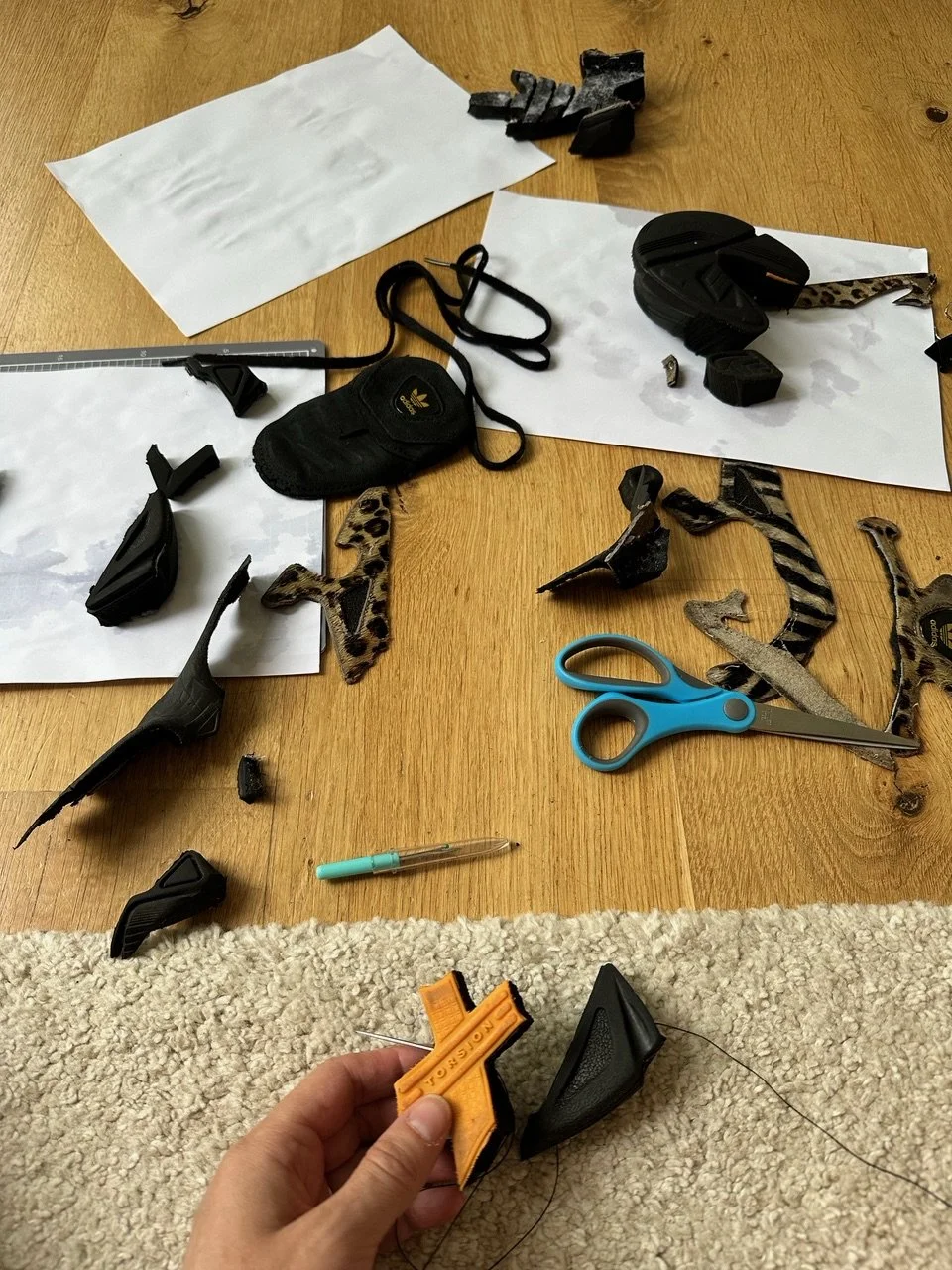
I’m still working on it. They’re being transformed into small accessories such as a necklace, earrings, and bracelets. There are still some materials left, and I’m continuing to experiment. These pieces haven’t yet found their next form. Now, my daughter is involved as well, which makes it even more special. She’s so excited to create a puppy toy from some of the bits, and she’s currently trying to convince me to give her one of the materials I’m saving for my own piece! Seeing her naturally think “what can this become?” instead of “throw it away” feels like the most beautiful part of the process.
How do you feel about the transformation? Do the things you have made feel like a continuation of the shoe's story, a rupture, rebirth, or something else entirely?
Rebirth is a great definition for it.
What did you learn from the process of deconstructing and reconstructing your shoes?
Creativity never ends
What was the most successful or rewarding part of the process?
Taking it apart stitch by stitch, with so many little pieces, was really meditative. Being with an amazing group of people, sharing stories, and finding new purpose in those “memories” really made my day! And of course, my accessories are also super cool!
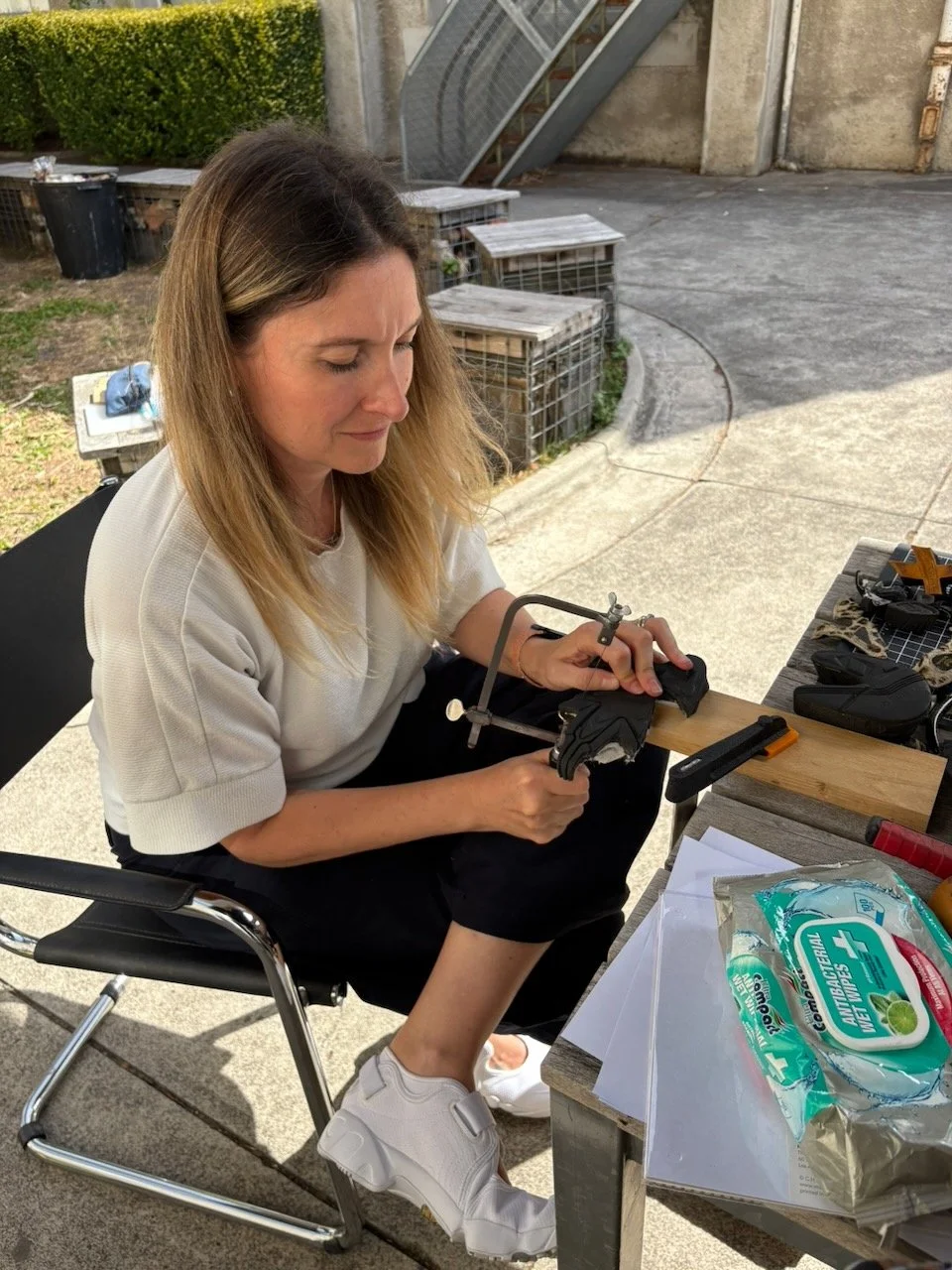
Pennie assisting with outsole deconstruction using a jeweller’s piercing saw. Video: Alex Sherlock, 2026.
What did you find challenging, and how did you overcome those challenges?
It was hard to deconstruct, and I really needed the tools available at the workshop to do so. I'm having some difficulty connecting the pieces at home now, and my needles and scissors aren't strong enough to cut and sew the overlapping leather pieces.
Has the process changed how you think about your other shoes, or how you acquire, care for, or dispose of shoes more generally?
As a footwear designer with over 20 years of experience working across global and Australian brands, I’ve been very connected to shoes for a long time, probably more deeply than a “normal” person. Can you imagine how many hours of my life I’ve spent studying and designing them? Throughout my career, I have seen how difficult it is to meaningfully implement circular principles within large commercial systems. Circularity is often discussed within the industry but rarely translated into experiences that feel personal and tangible. The power of this workshop was that it created that translation. By inviting us to deconstruct our own footwear, it brought hidden materials, construction, and labour into view. Objects that might have been considered worn out or ready for disposal became sites of inquiry, creativity, and renewed value.
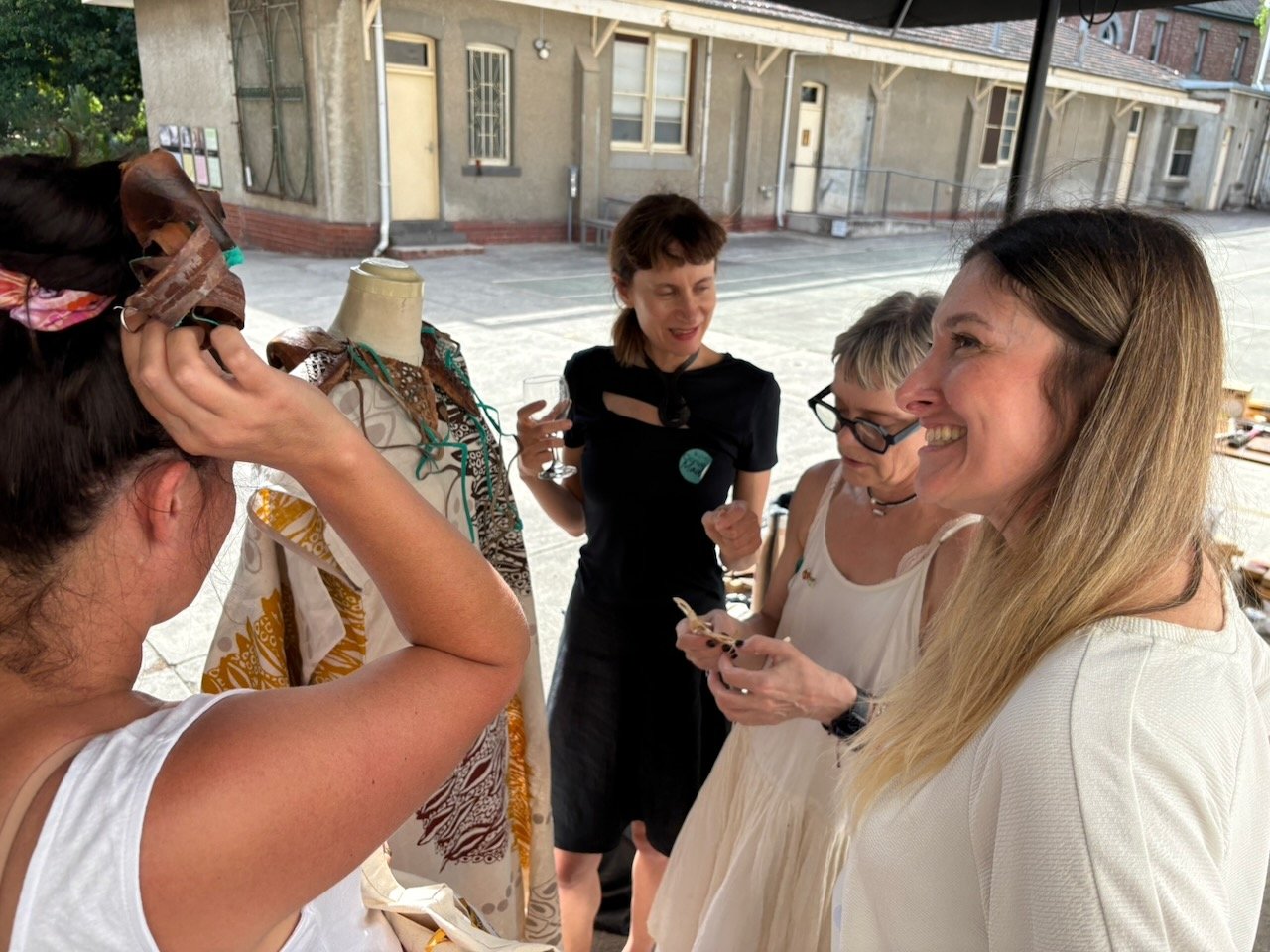
What impacted me most was the atmosphere in the room during those conversations. Each participant brought a story connected to their footwear. Through sharing these narratives, the workshop became more than a technical exercise. It became a moment of pause within a culture of rapid consumption. We reconsidered what our shoes represented at certain times in our lives, why we kept them, and what it meant to let them go. That shared reflection brought the participants together and fostered a deeper awareness of ownership, care, and material life.
The hands-on nature of the workshop stimulated creativity, problem-solving, and fine motor skills, while also supporting well-being through focused making. I loved the way sustainability was not presented as a lesson, but experienced directly through deconstruction, transformation and reuse. I think we all left with a more thoughtful understanding of our relationship with our shoes and their value.
After years of working inside large-scale production environments, I can see how necessary initiatives like this are. Commercial pressures often limit the ability to prioritise repair, reuse, and material extension in meaningful ways. This workshop operates at a human scale, where those principles can be explored honestly and experientially. It bridges research, craft, storytelling, and sustainability in a way that feels accessible and grounded. There were so many highlights in this experience, but honestly, hearing the reasons and stories behind each pair was what impacted me the most. It’s so intimate and powerful what our shoes come to represent in our lives.
What advice would you give someone considering doing this with a pair of their own shoes?
DO IT! It’s therapeutic, sustainable, and so much fun!
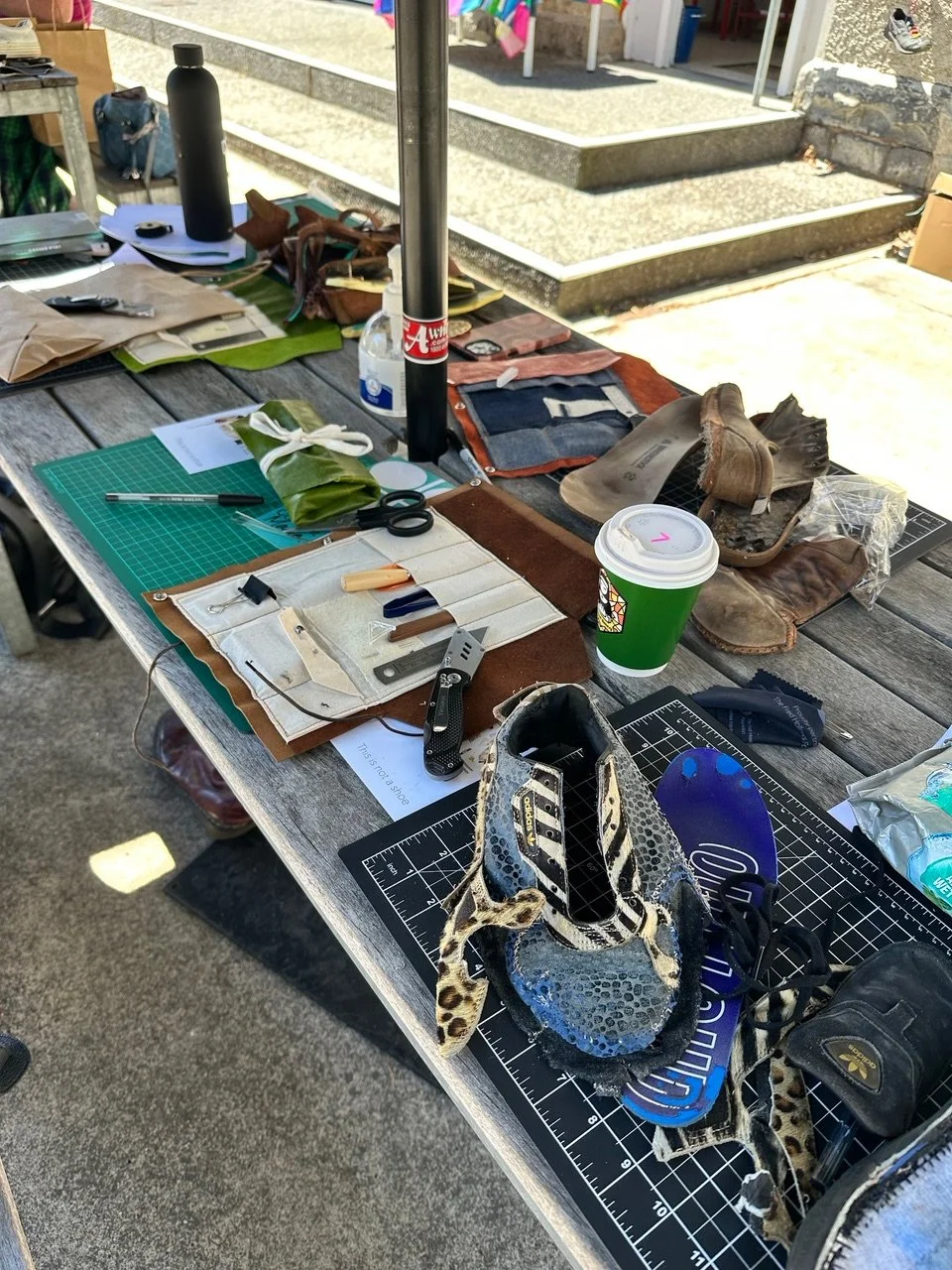
Image: Priscila Winckler, 2026.