Reimagining the Australian Sheepskin Boot: What happens when industry, education and research meet
By Alexandra Sherlock - 15th May, 2026.
A timely coincidence
In recent years, Australian sheepskin boot manufacturers have navigated a complex international trademark landscape, one that has made the cultural origins of the sheepskin boot a particularly live question. It was in this context, early in 2025, that I found myself writing for The Conversation about the place of the sheepskin boot in Australian material culture. Coincidentally, it was at this same moment that EVERAU approached RMIT University to propose a collaborative project. The timing couldn’t have felt more relevant. Here was an opportunity for an Australian brand and an Australian university to work together to reinforce a story grounded in craft, heritage and cultural meaning.
EVERAU is an Australian sheepskin footwear brand committed to the values and coastal lifestyle that have historically influenced the character of sheepskin boots. When I was introduced to the opportunity by RMIT's Associate Dean of Design at the School of Fashion and Textiles, I was eager to apply my sixteen years of research as a sociocultural anthropologist specialising in footwear directly into my teaching. Incorporating current research into teaching enriches the student experience, making it one of the most valuable offerings a university can deliver, and this project provided an excellent opportunity to demonstrate that.
The course and the collaboration
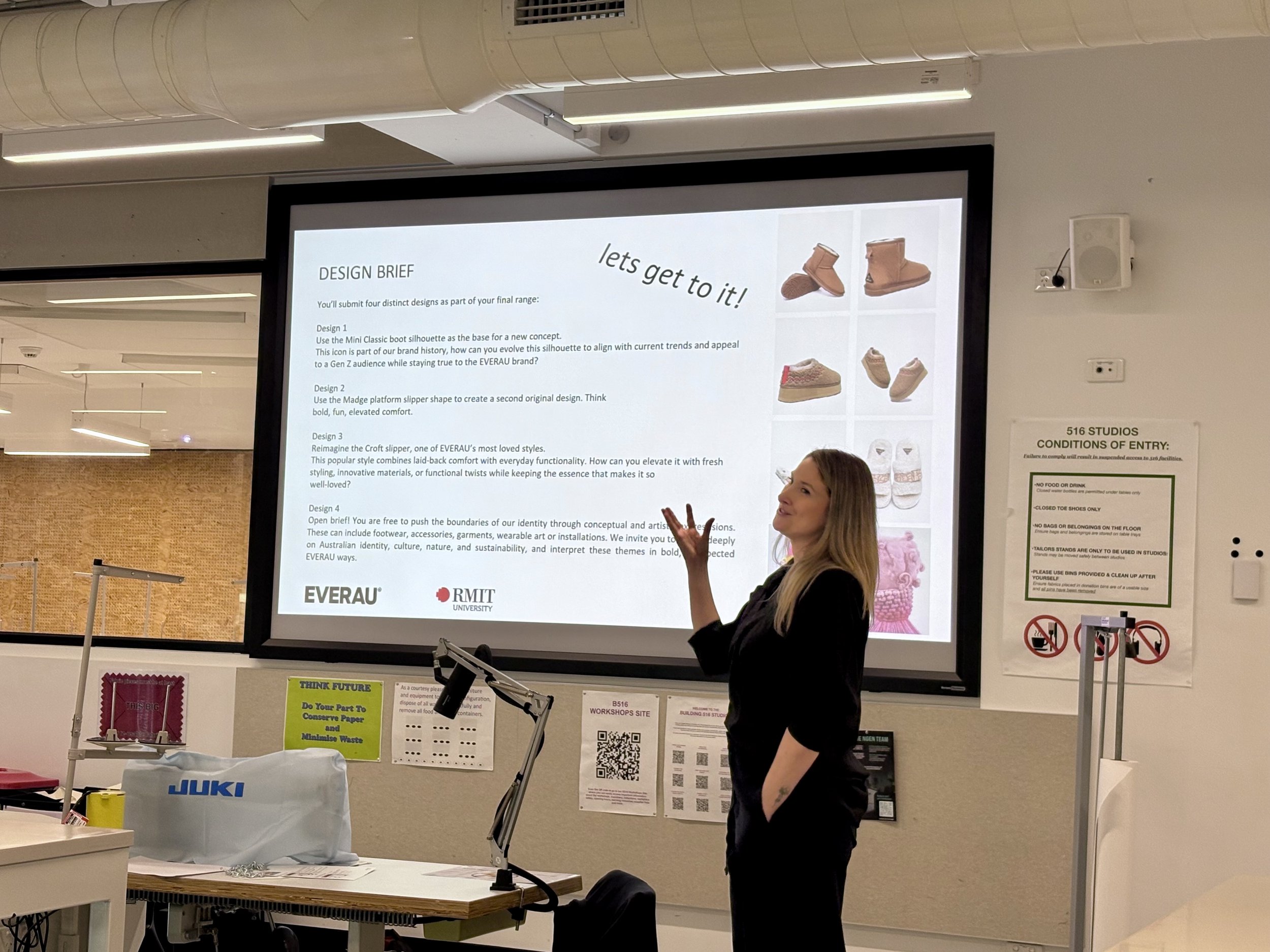
The RMIT x EVERAU Student Design Award for Sheepskin Shoemaking was embedded in the core course Partnered Project, a Work Integrated Learning course taken by second-year students in the Bachelor of Fashion (Design) at RMIT’s School of Fashion and Textiles. The course is coordinated by Sang Thai and Dr. Deborah Wills-Ives, who structure it around a series of parallel industry partnerships, co-developing bespoke briefs with each partner to provide students with real-world context, expectations, and deliverables. I was brought in for the collaboration because of my research background, and together we developed a brief with EVERAU that asked students to engage with the sheepskin boot not simply as a product to be restyled, but as a complex cultural object with deep connections to Australian lifestyle and material culture.
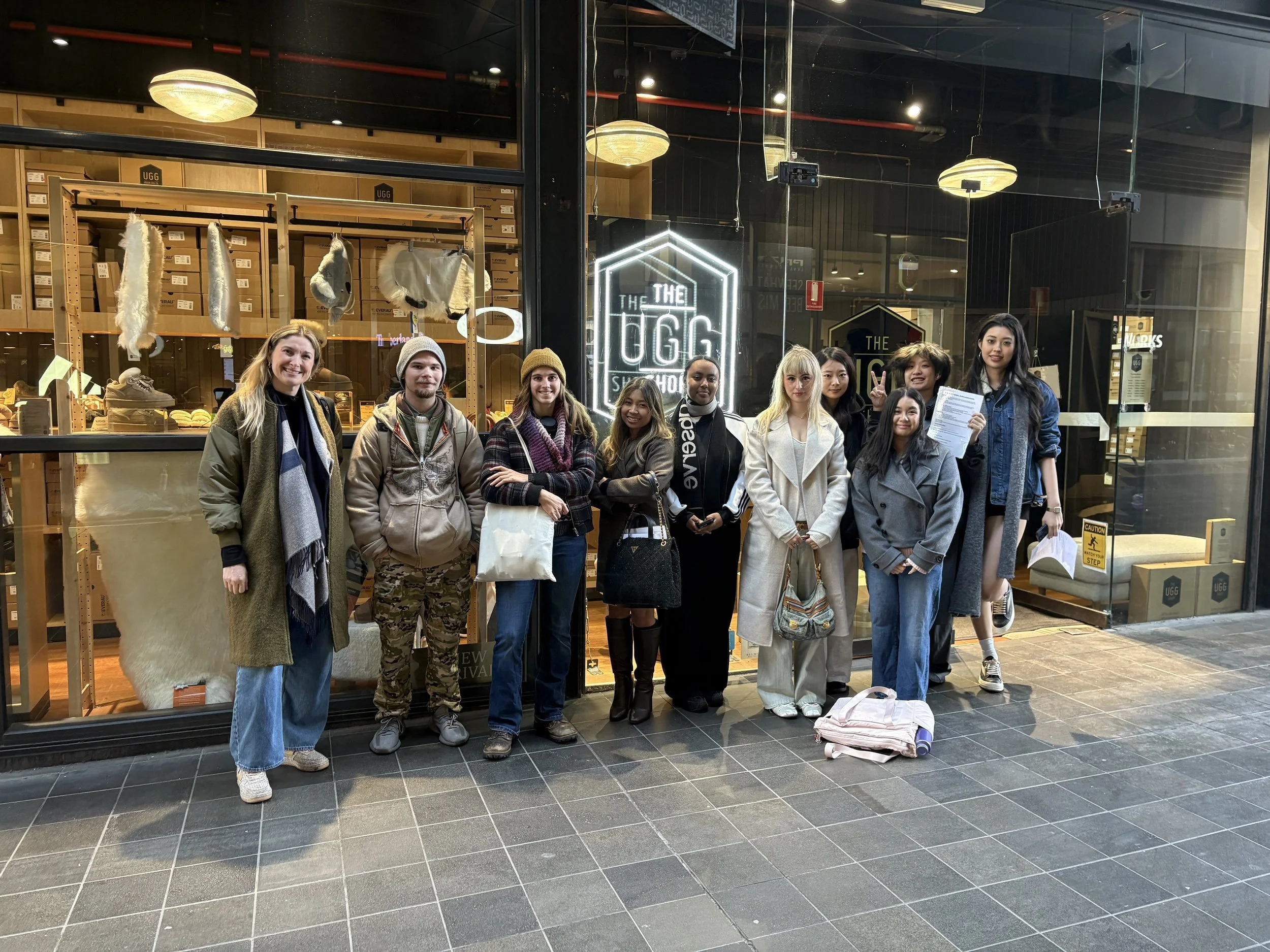
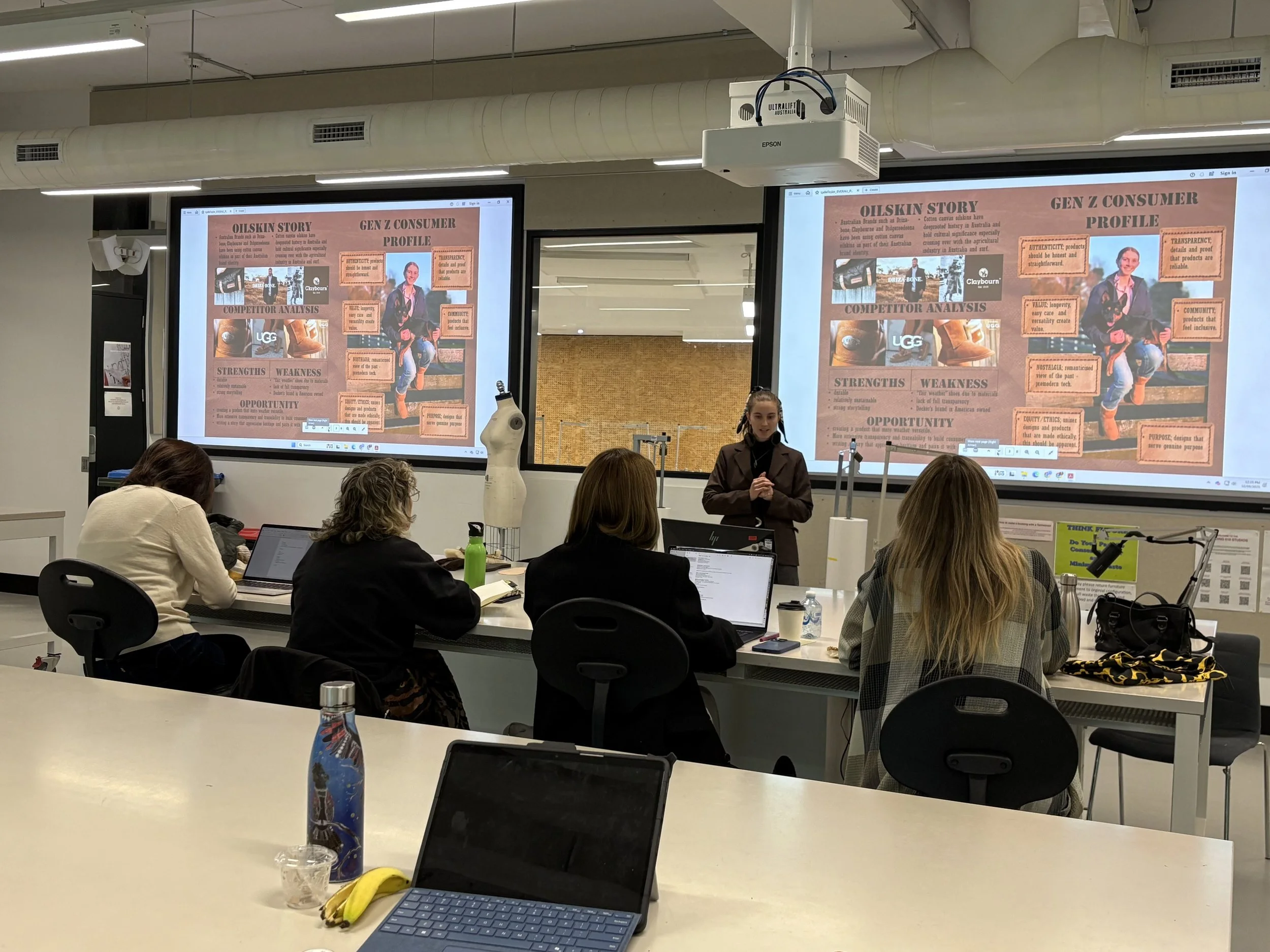
EVERAU’s team, including their marketing manager, general manager, and senior designer, attended early sessions and engaged directly with students in what felt like a genuine exchange of knowledge. Students learned about the realities of running an Australian footwear brand: the commercial pressures, supply chain considerations, and the challenge of connecting with younger consumers. EVERAU, in turn, found themselves in an, at times, candid conversation with the Gen Z consumers they were trying to reach, hearing first-hand about attitudes to sustainability, traceability, authenticity and material provenance.
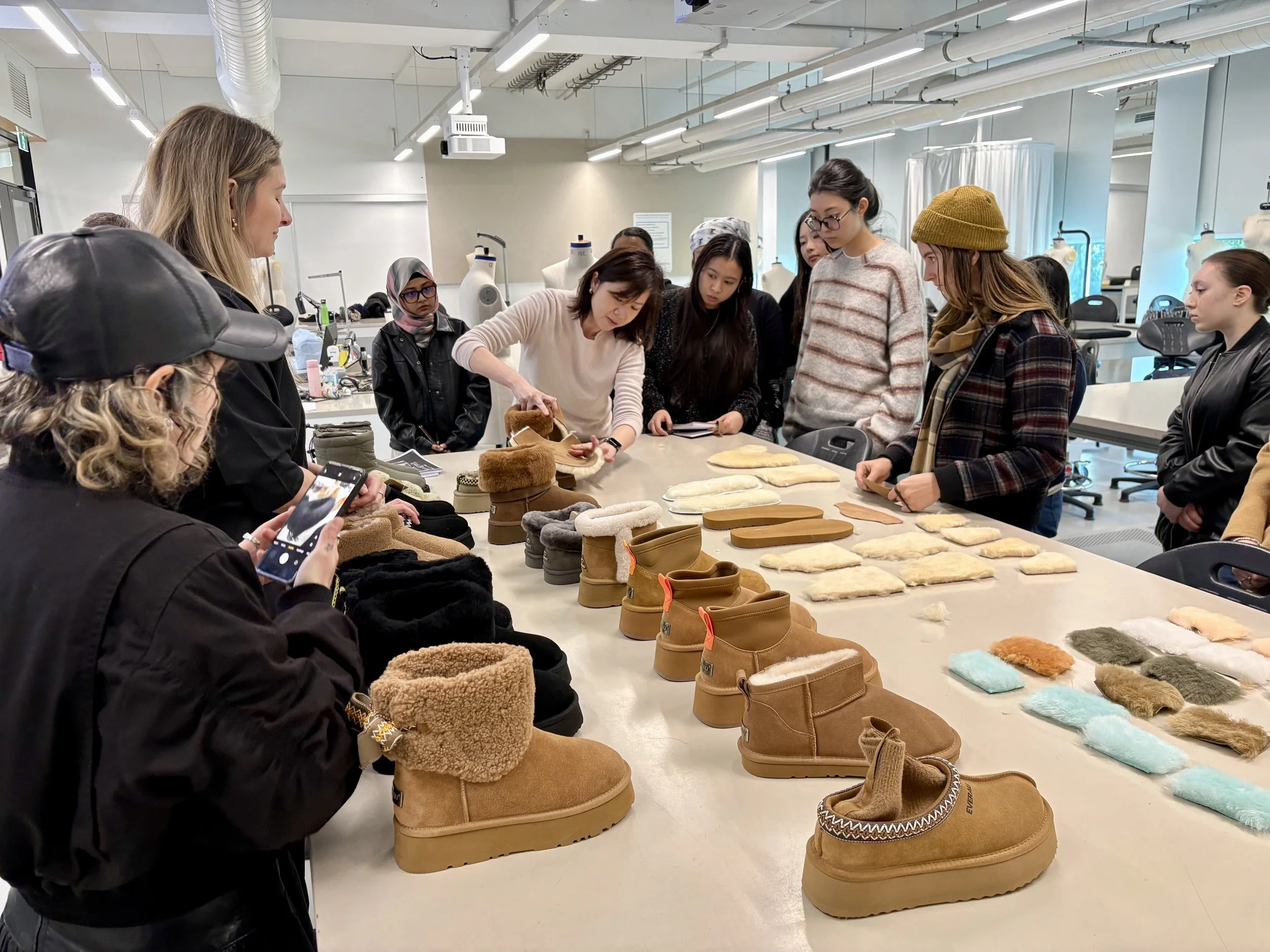
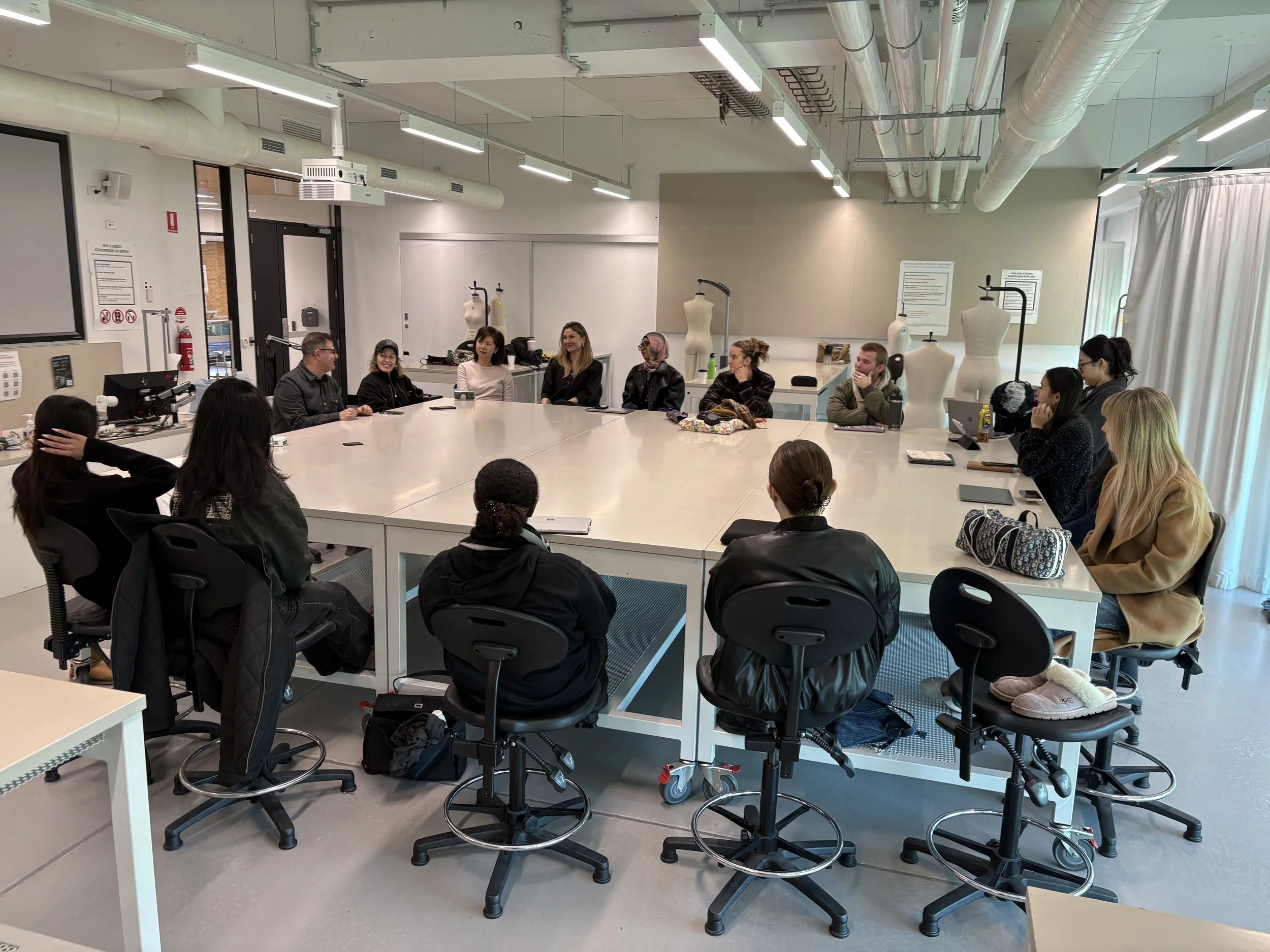
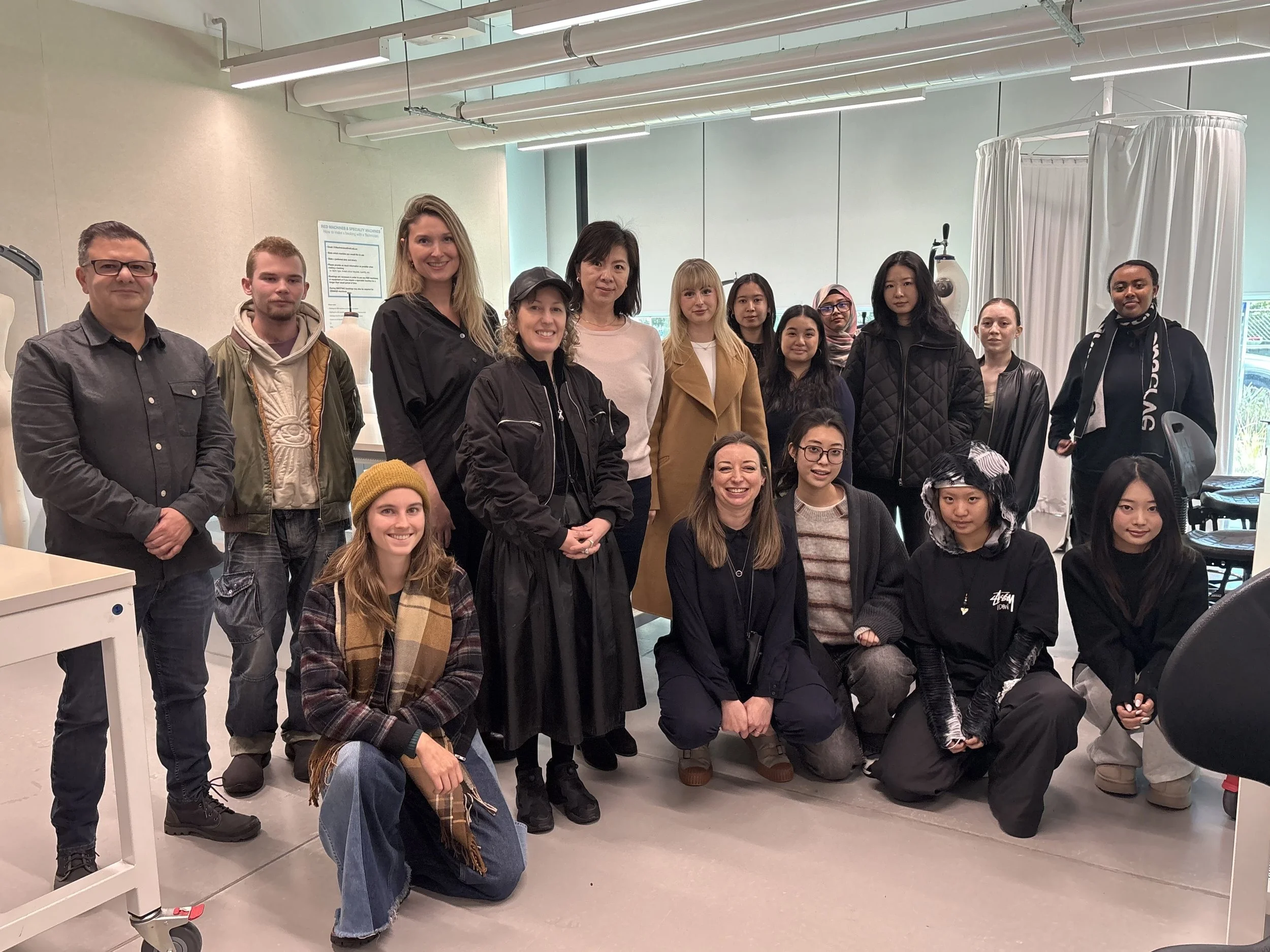
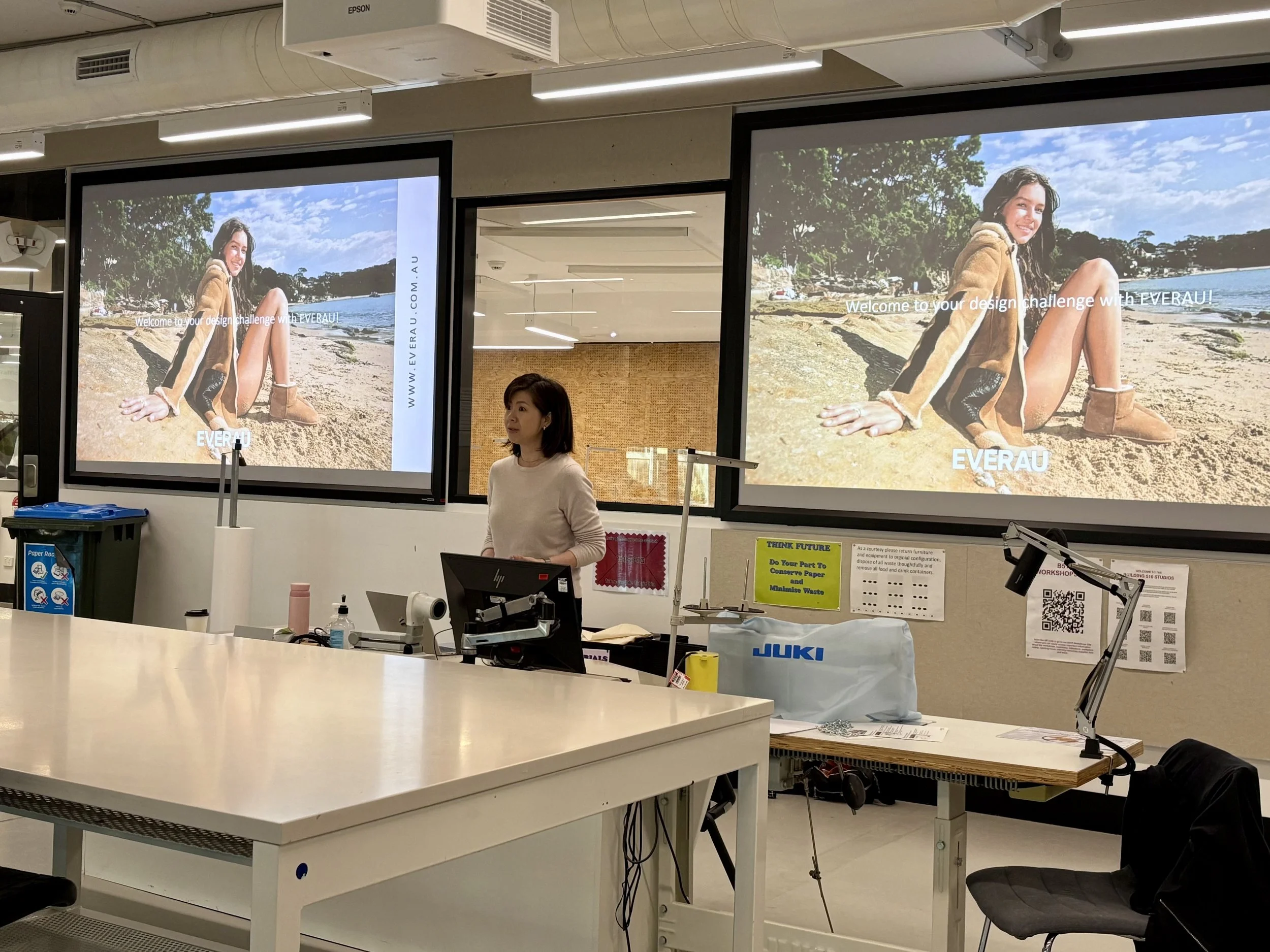
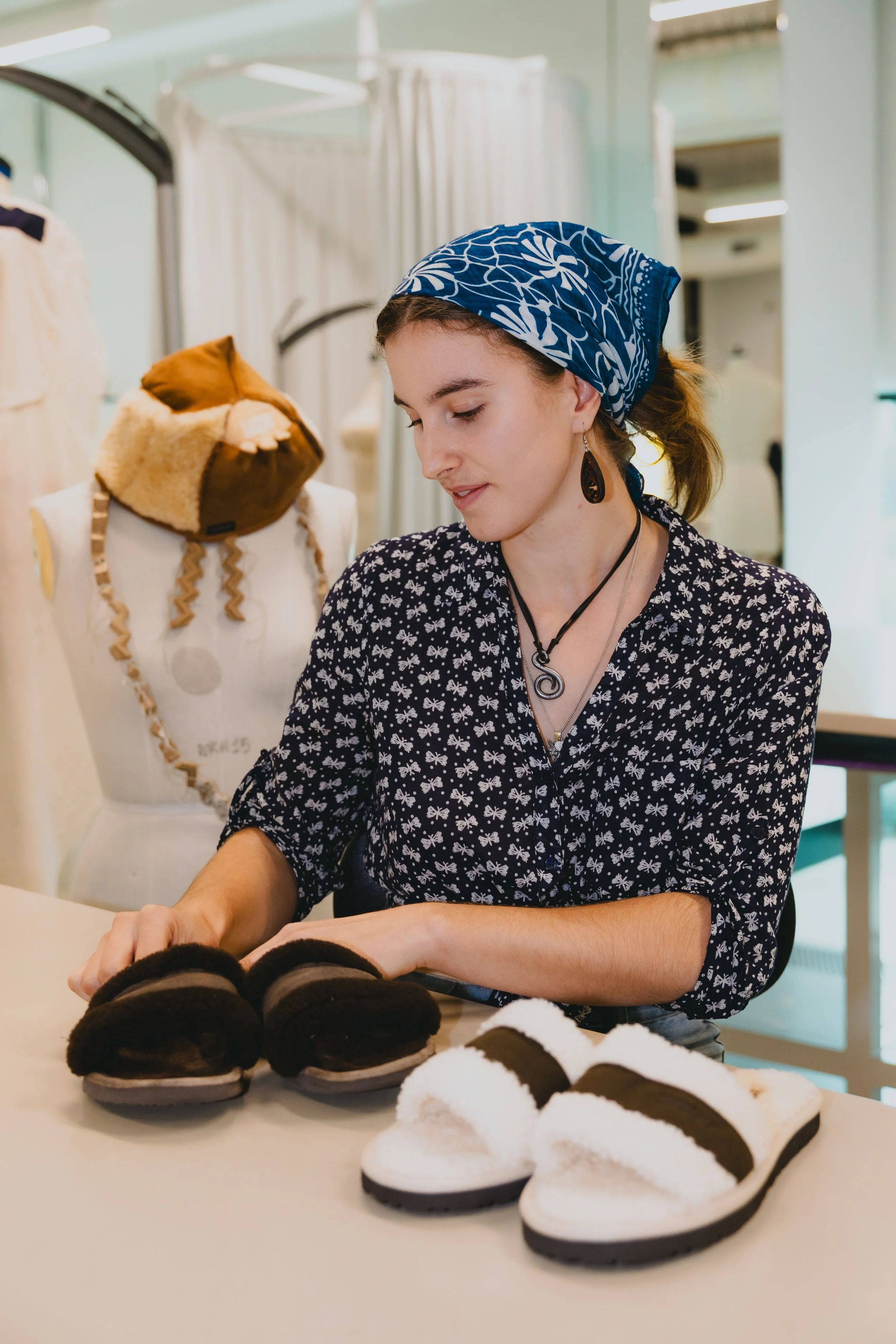
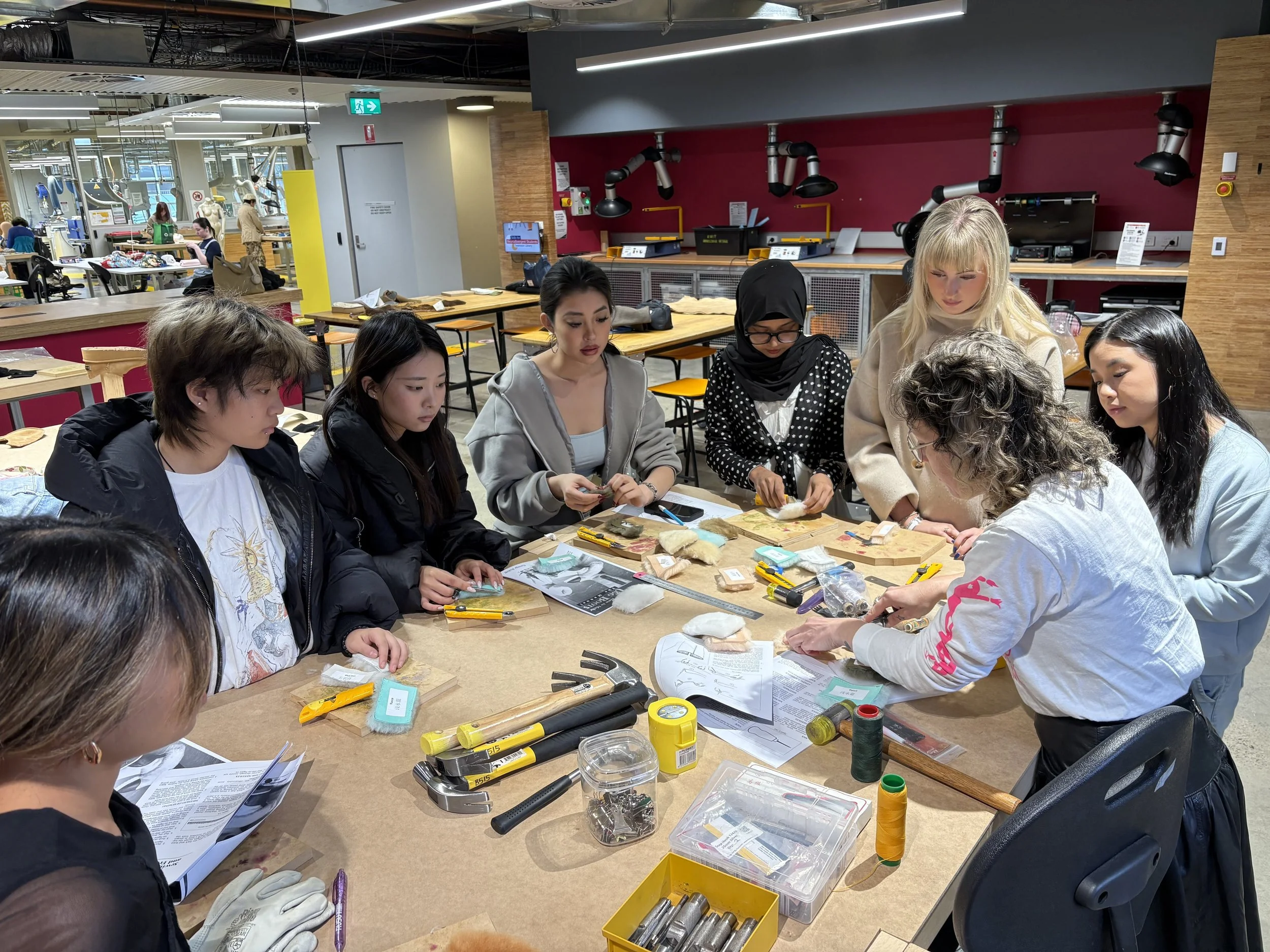
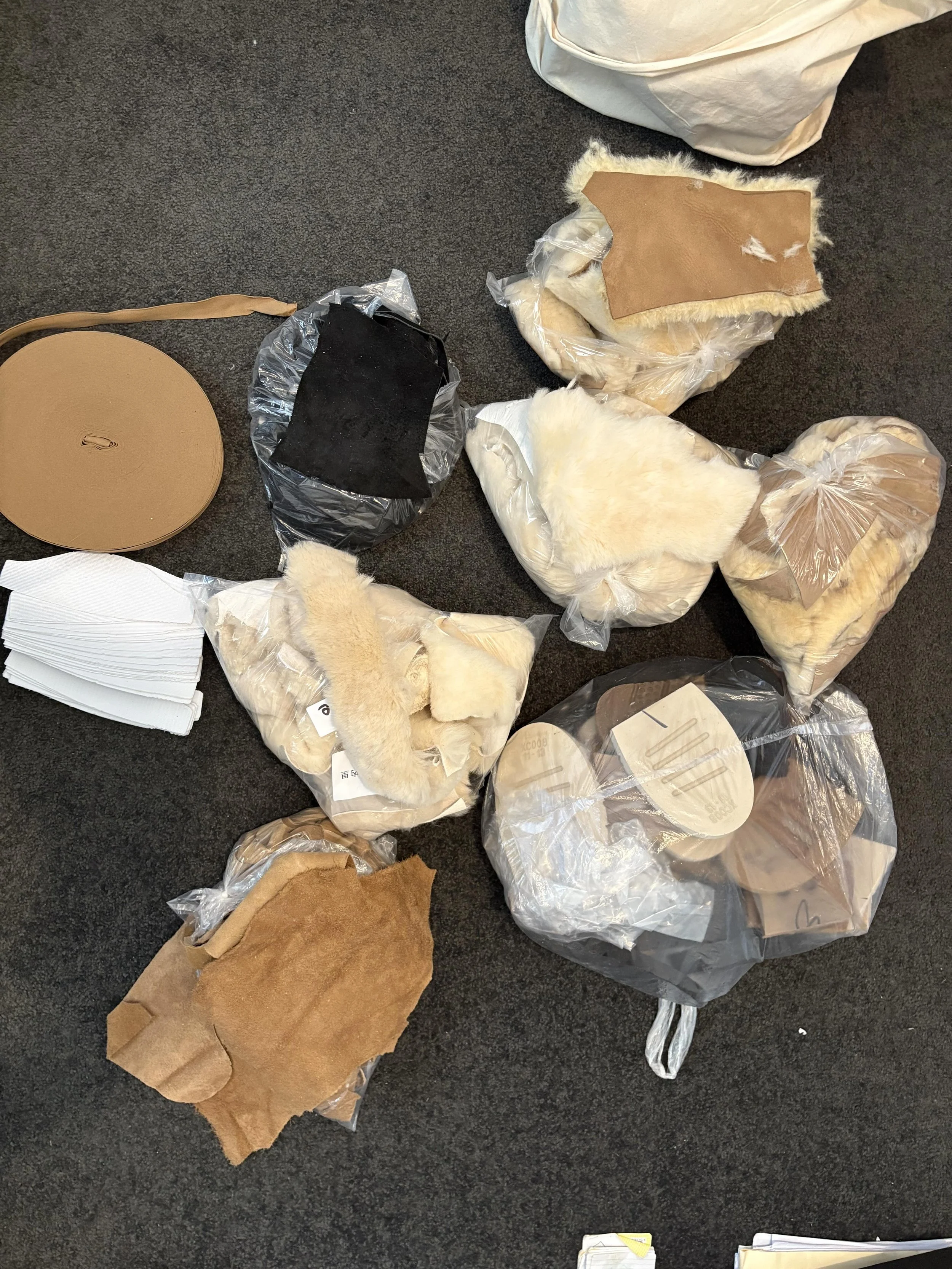
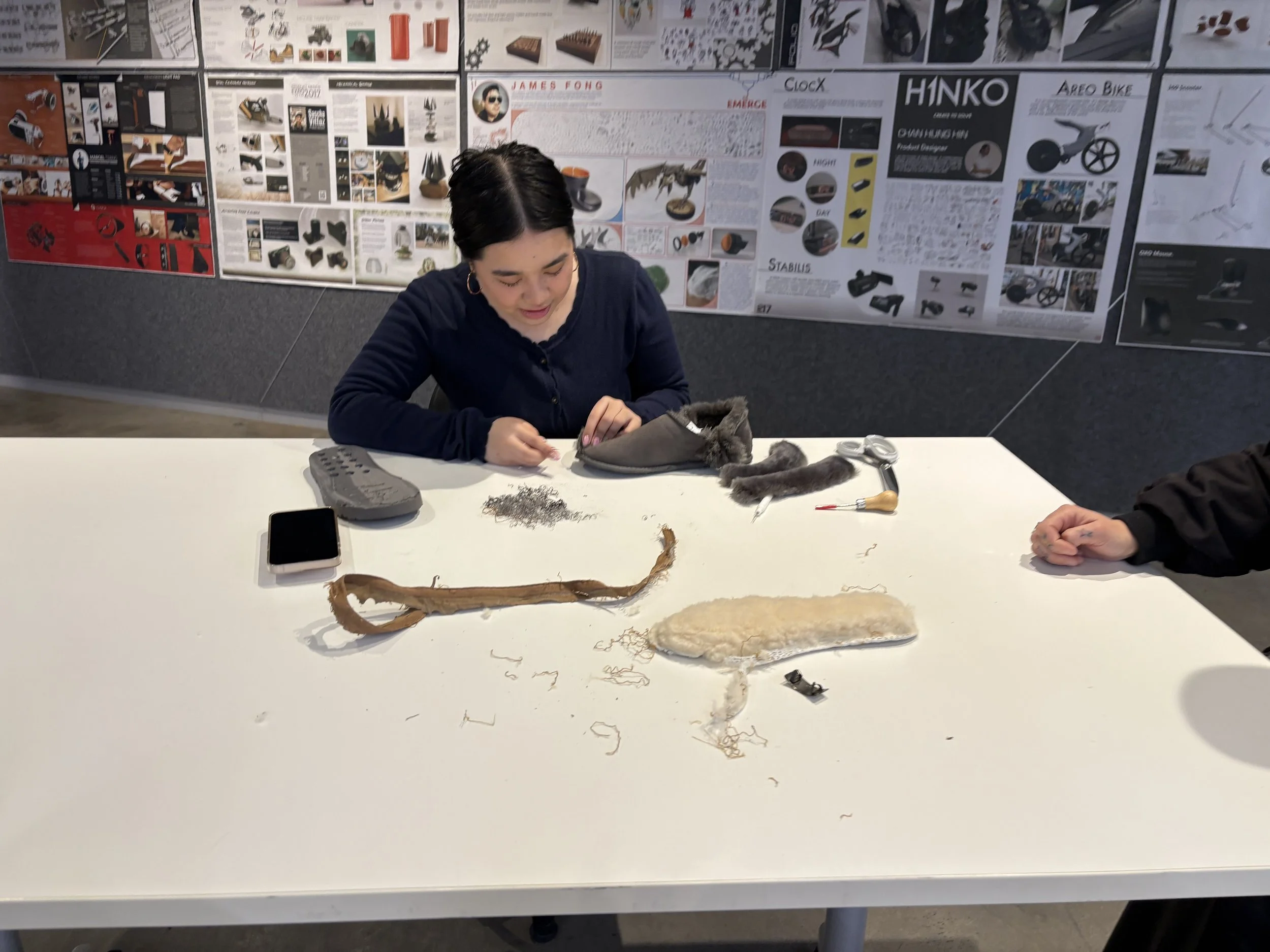
The technical dimension of the project was led by casual lecturer Lou Clifton, founder of The Shoe School, an independent footwear-making business based in Melbourne. Lou brought specialist expertise in sheepskin construction, including the material’s specific constraints and possibilities when combined with various techniques and processes, which complemented my own focus on the sociocultural dimensions of footwear. Alongside Lou’s input, students had access to RMIT’s makerspace technologies: 3D printing, computerised embroidery, laser etching, dyeing, and painting. EVERAU supplied sheepskin offcuts for material experimentation, and the resulting studio work was rich and creative.
Australian identity and the sheepskin boot
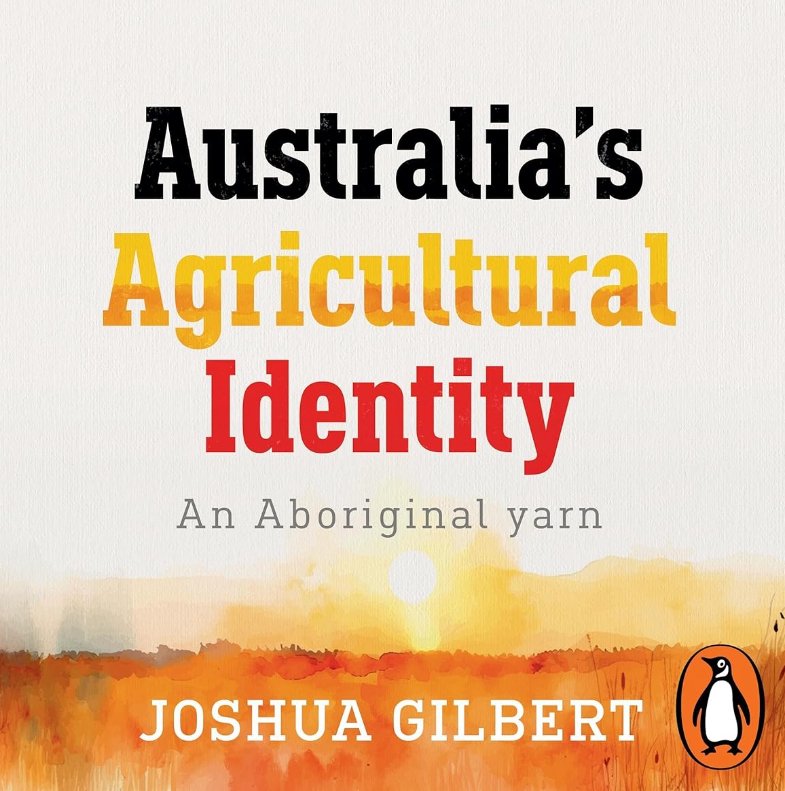
Central to the intellectual frame of the project was a critical engagement with what the sheepskin boot actually means and to whom. Australia’s relationship with merino wool and sheepskin is inseparable from its colonial history: sheep farming irreversibly transformed the continent’s landscape and economy, and that history carries both cultural significance and ethical responsibility. Drawing on Josh Gilbert’s work on Australian agriculture in relation with Indigenous knowledge, the course asked students to understand that the materials they were handling have stories extending well beyond the retail context.
As a British academic working in Australia, I am conscious of the responsibility that carries. The course aligned with RMIT’s commitments to responsible practice and reconciliation, and choices about technique and materials were made accordingly. The question of burnishing, for instance, requires careful handling given its resonances with Indigenous possum skin cloak traditions. These are conversations that deserve sustained attention beyond any single project, but naming them within the course was necessary to avoid culturally inappropriate and unethical practices. Unfortunately, no Aboriginal or Torres Strait Islander students participated this time. However, it would be interesting to explore the stories that could emerge from a First Nations perspective engaging with such a culturally complex object.
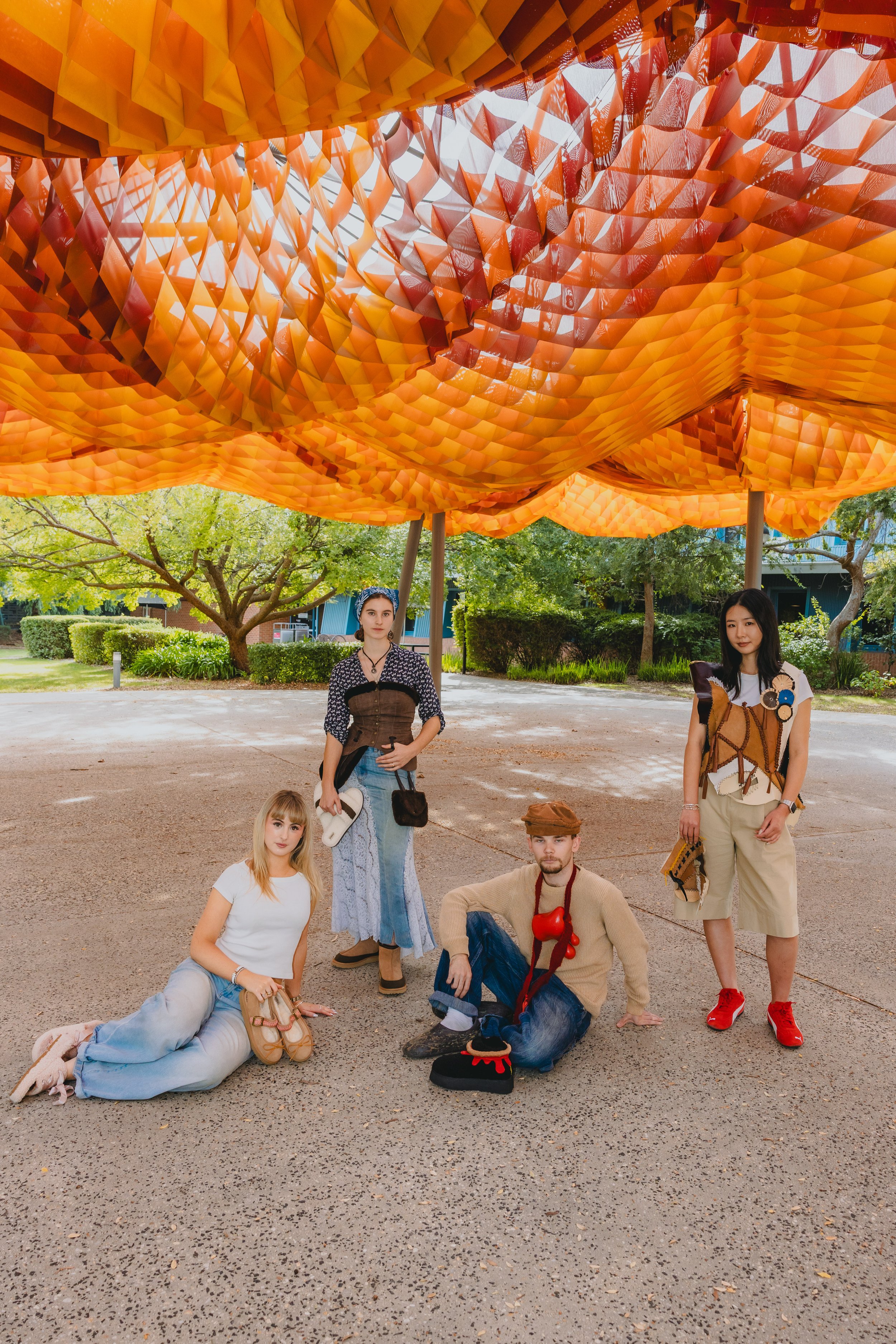
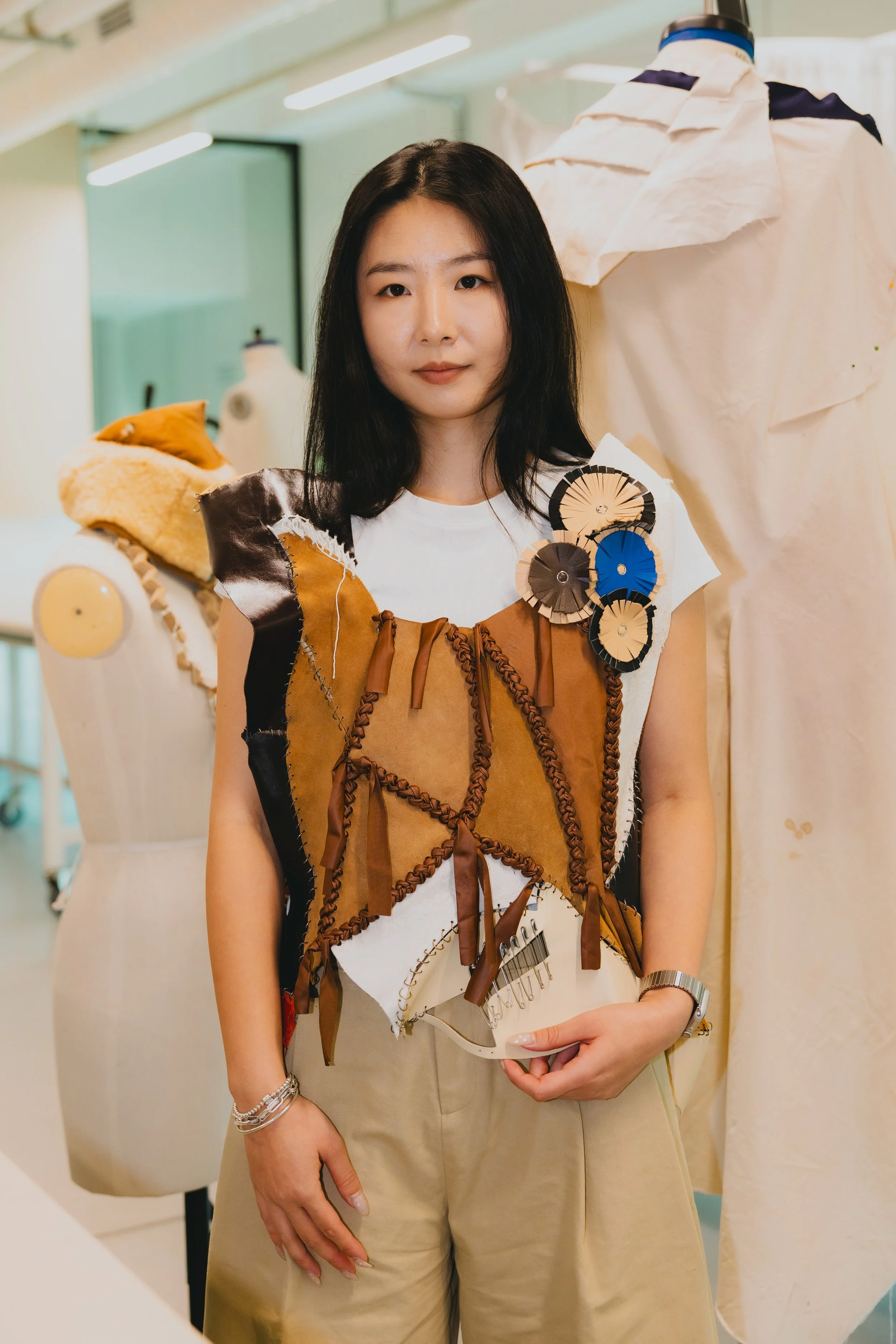
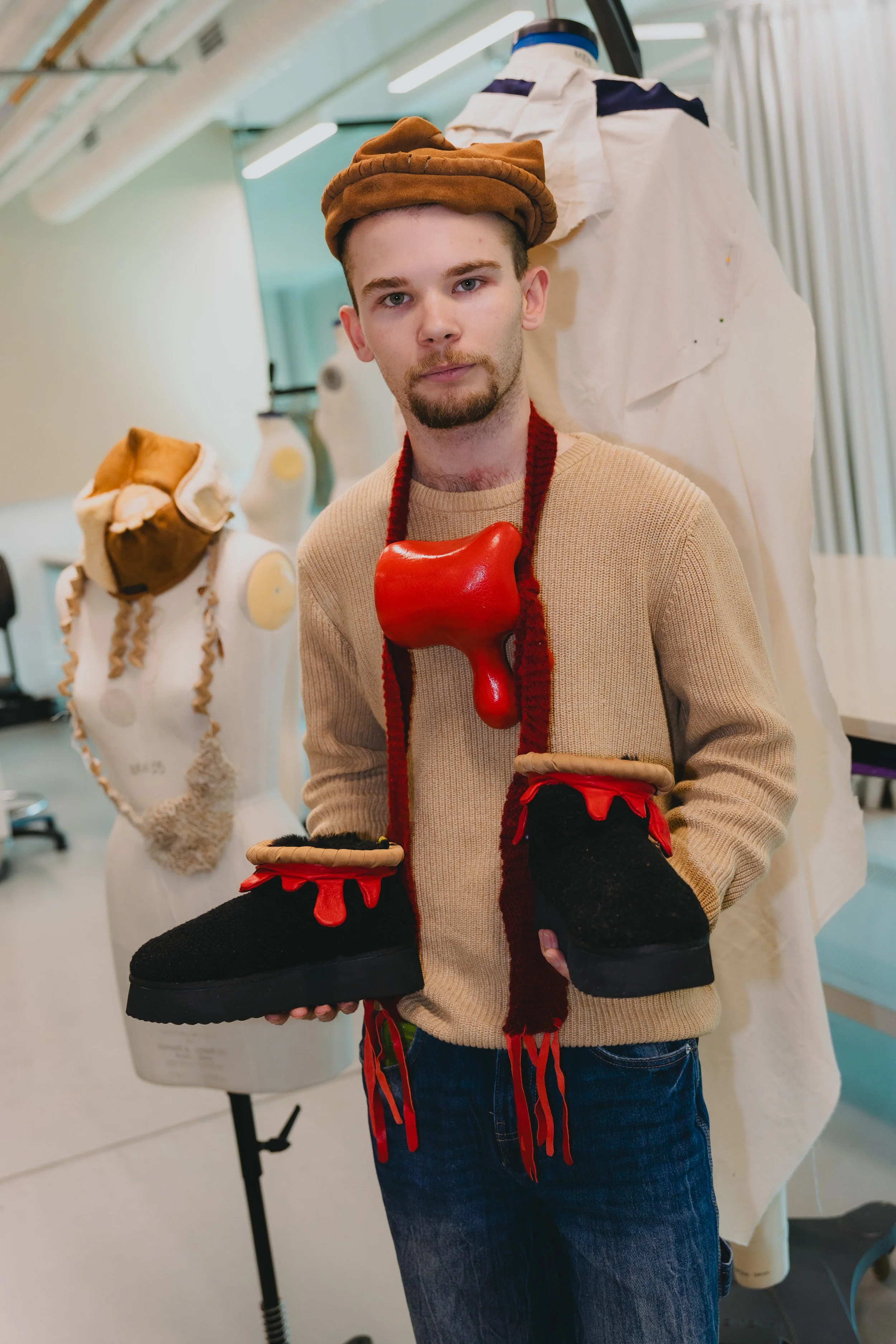
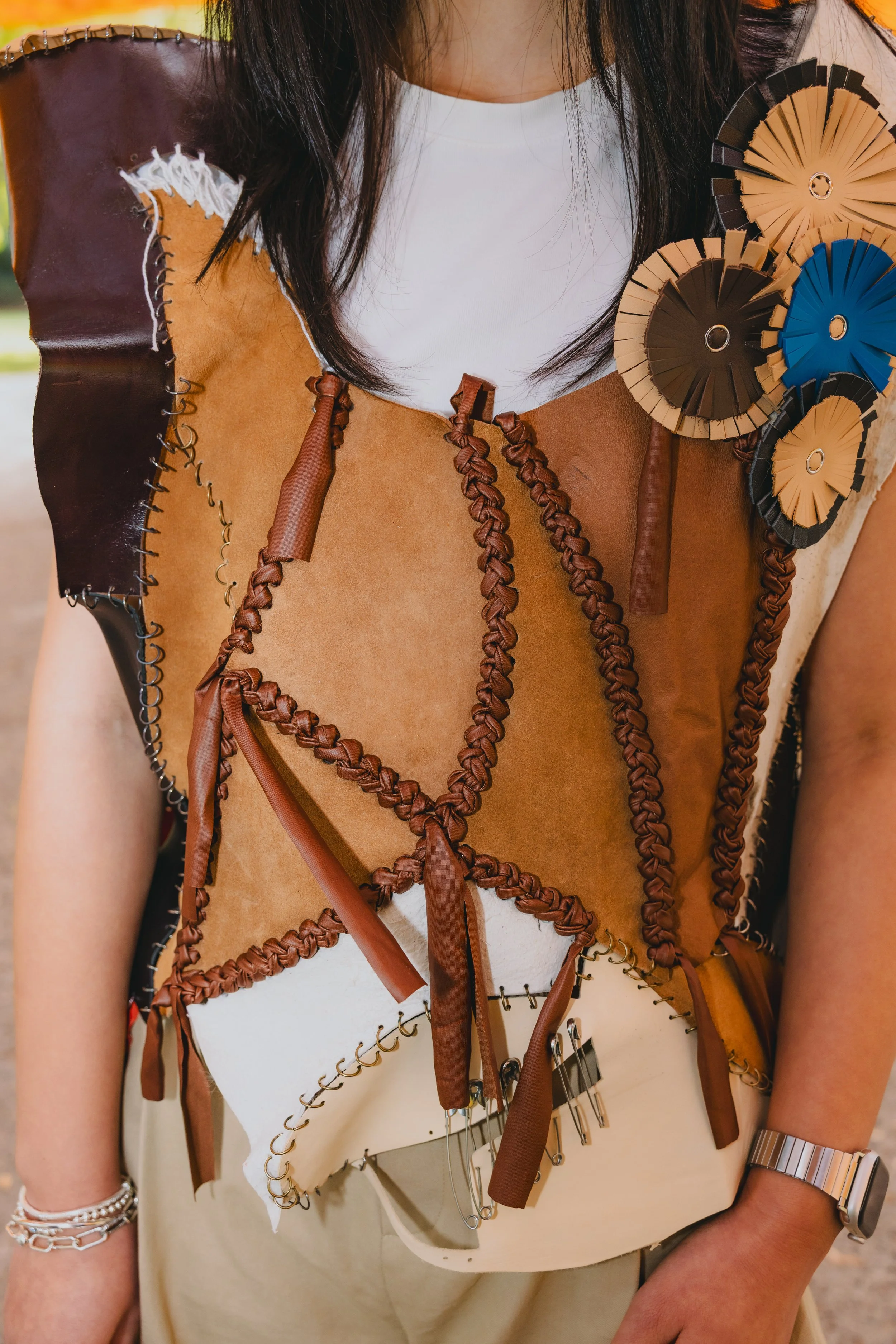
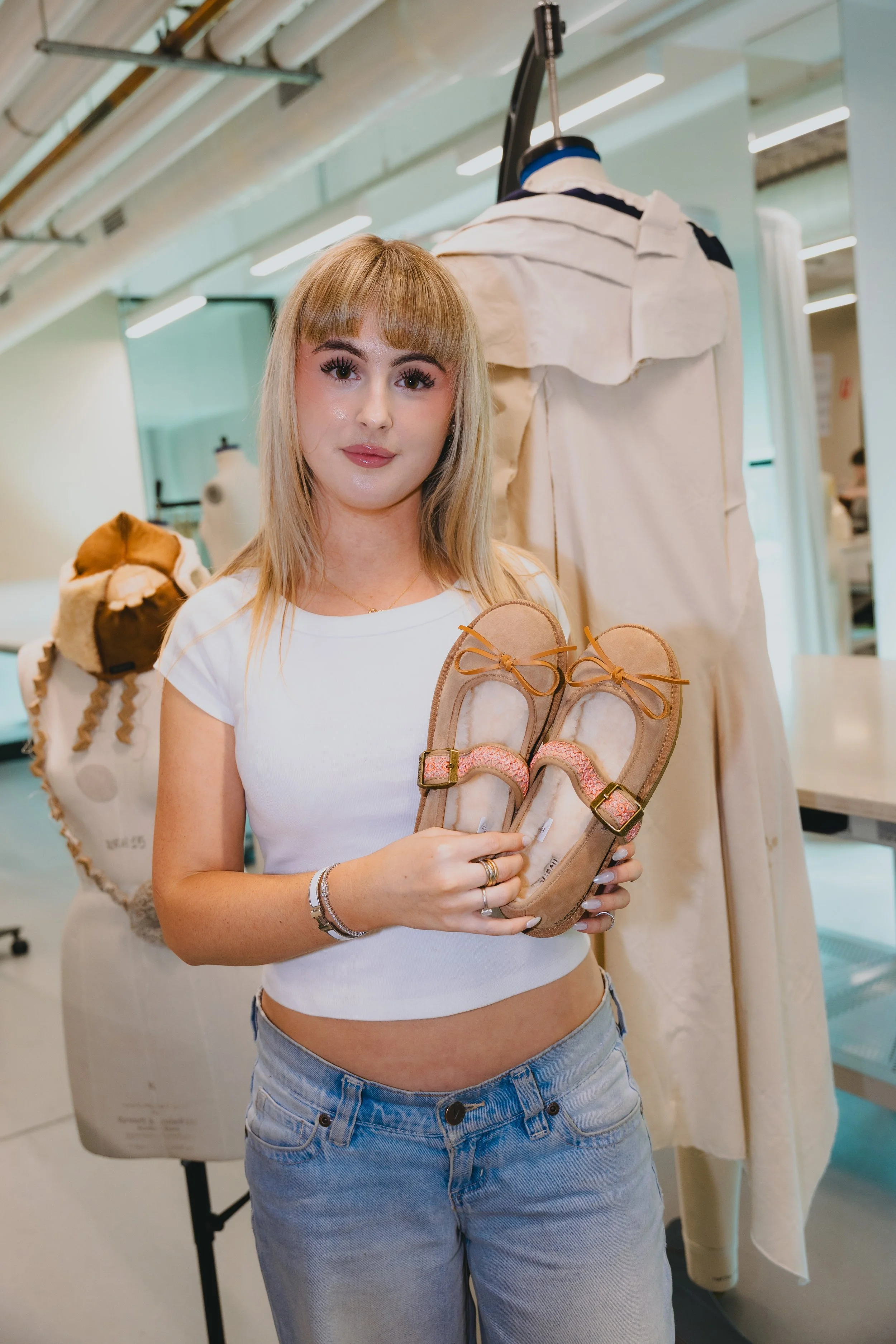
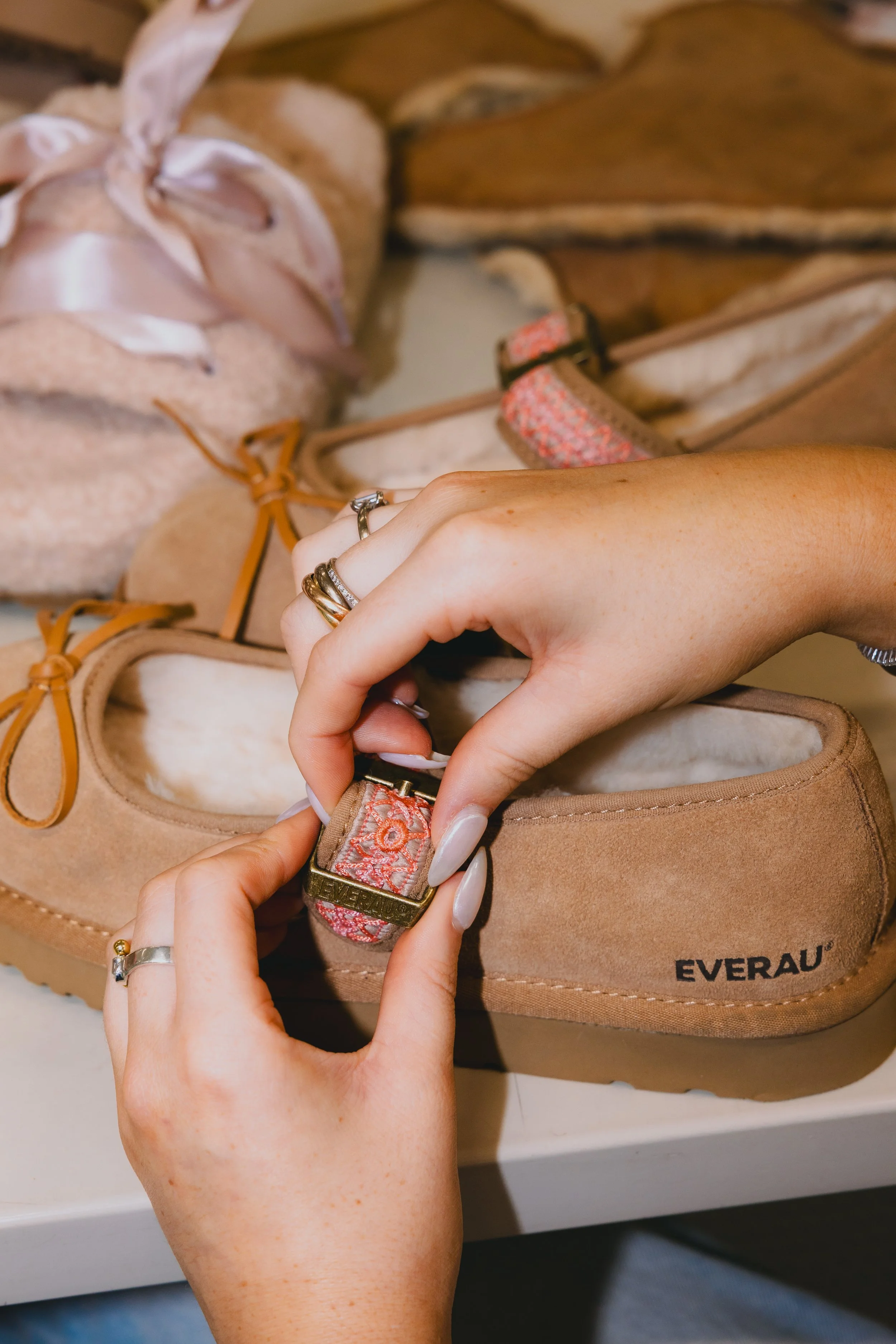
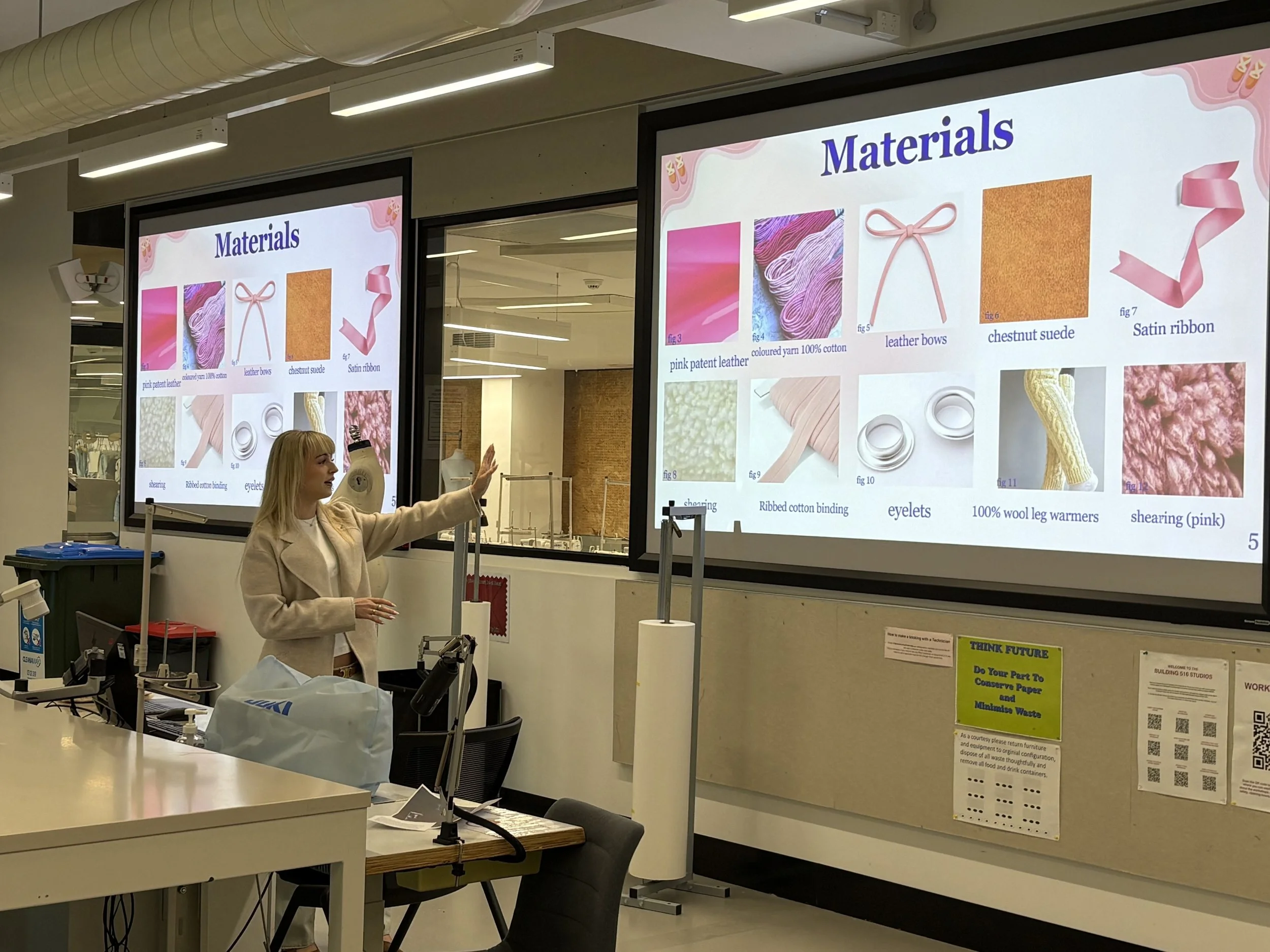
The reflexive approach taken resulted in student work that reflected the complexity and nuance of Australian design, with each student asked to reflect on their own relationship with the footwear archetype and the culture within which it exists. Lydie Taylor, who grew up on a sheep farm, brought deep material knowledge to a design that paired sheepskin with oilskin, constructing a land-to-sea narrative rooted in the emotional durability of Australian material culture. Tianyin Yang drew on her knitted textiles skills developed elsewhere in the program to use sheepskin offcuts in ways that foregrounded material economy, ethical production and customisation. Madeleine Graham recognised the ballet flat as an equally significant Gen Z footwear archetype and designed a hybrid that extended the brief, pairing the softness of the sheepskin boot with the structure and materials of the ballet flat. Harrison Spunner proposed a design built around the Australian meat pie, a concept that operated as both humorous cultural storytelling and a pointed commentary on what counts as a national icon. Beyond the winners, the approaches across the full cohort were distinct; collectively, they demonstrated the range of responses a relevant and well-framed brief can produce.
What industry and university collaborations make possible
When EVERAU returned for the final assessment, their enthusiasm for the outcomes was clear. Following a competitive selection process, Lydie Taylor, Tianyin Yang, Madeleine Graham and Harrison Spunner were named recipients of the 2026 Student Design Award for Sheepskin Shoemaking, announced ahead of Australian Fashion Week, with several of their winning designs now progressing into production under the EVERAU label. In an industry where footwear manufacturing has largely moved offshore, the partnership makes an important argument: that preserving shoemaking knowledge, technical skill and material understanding within Australia is both possible and worth investing in.
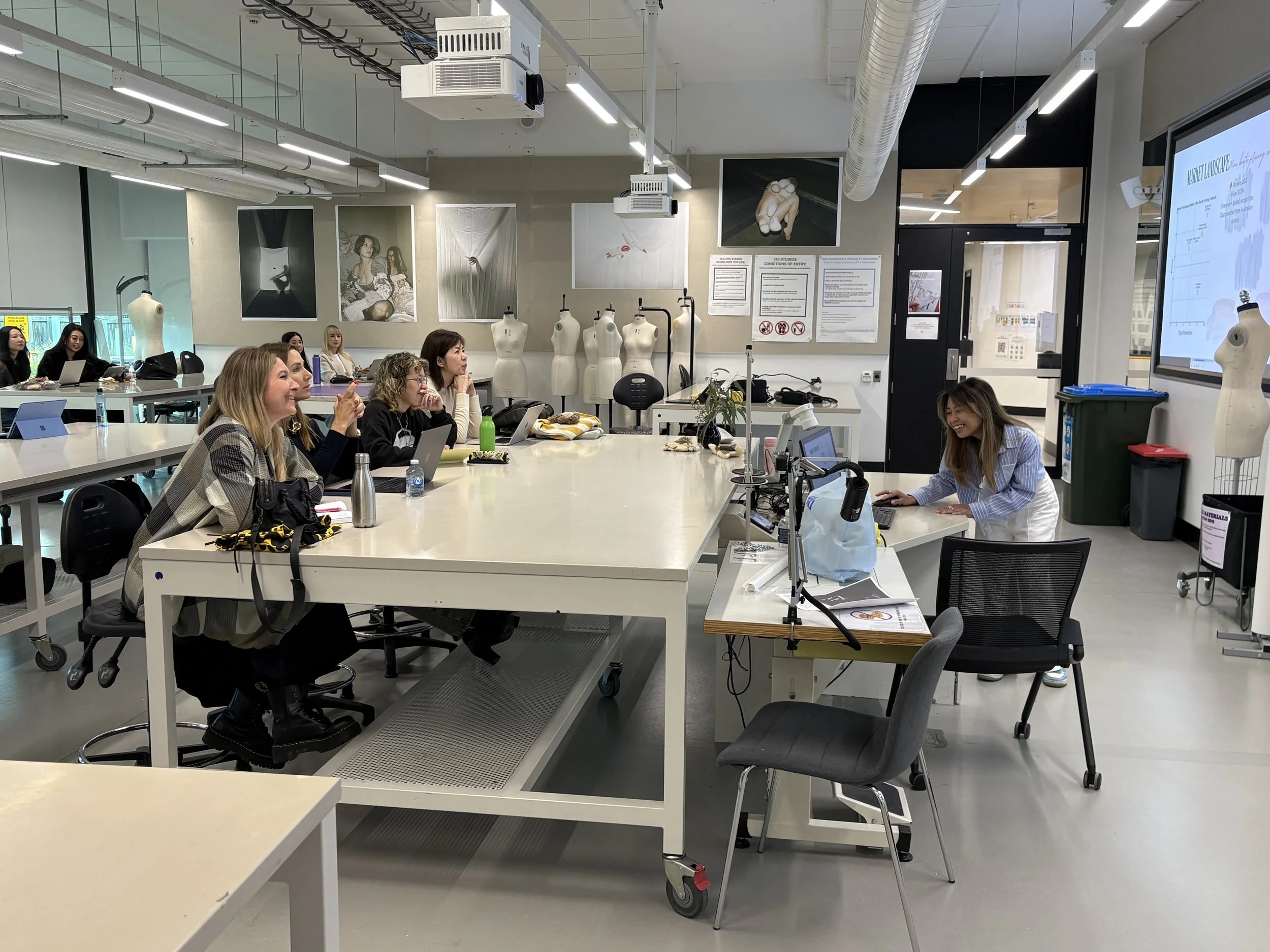
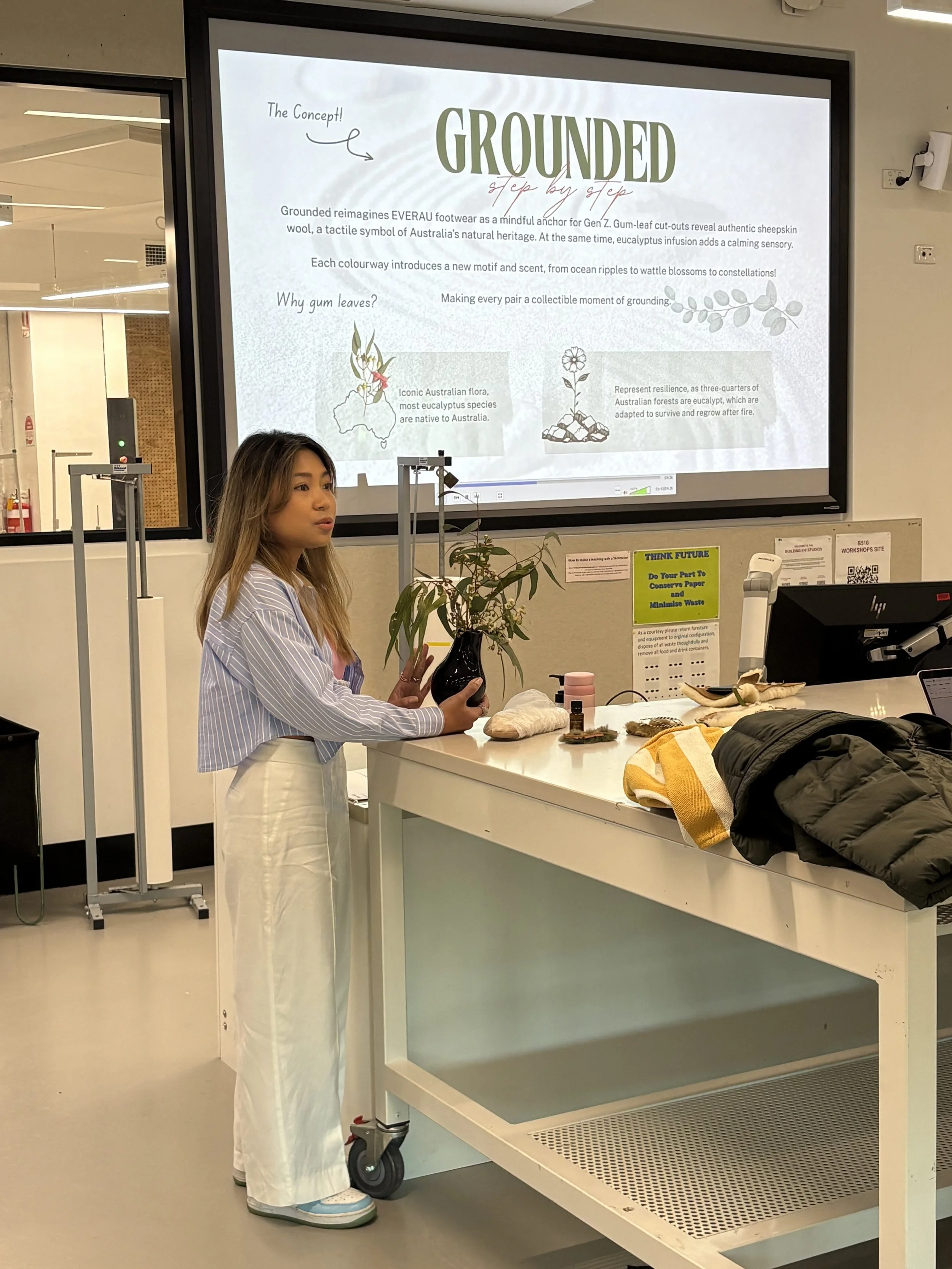
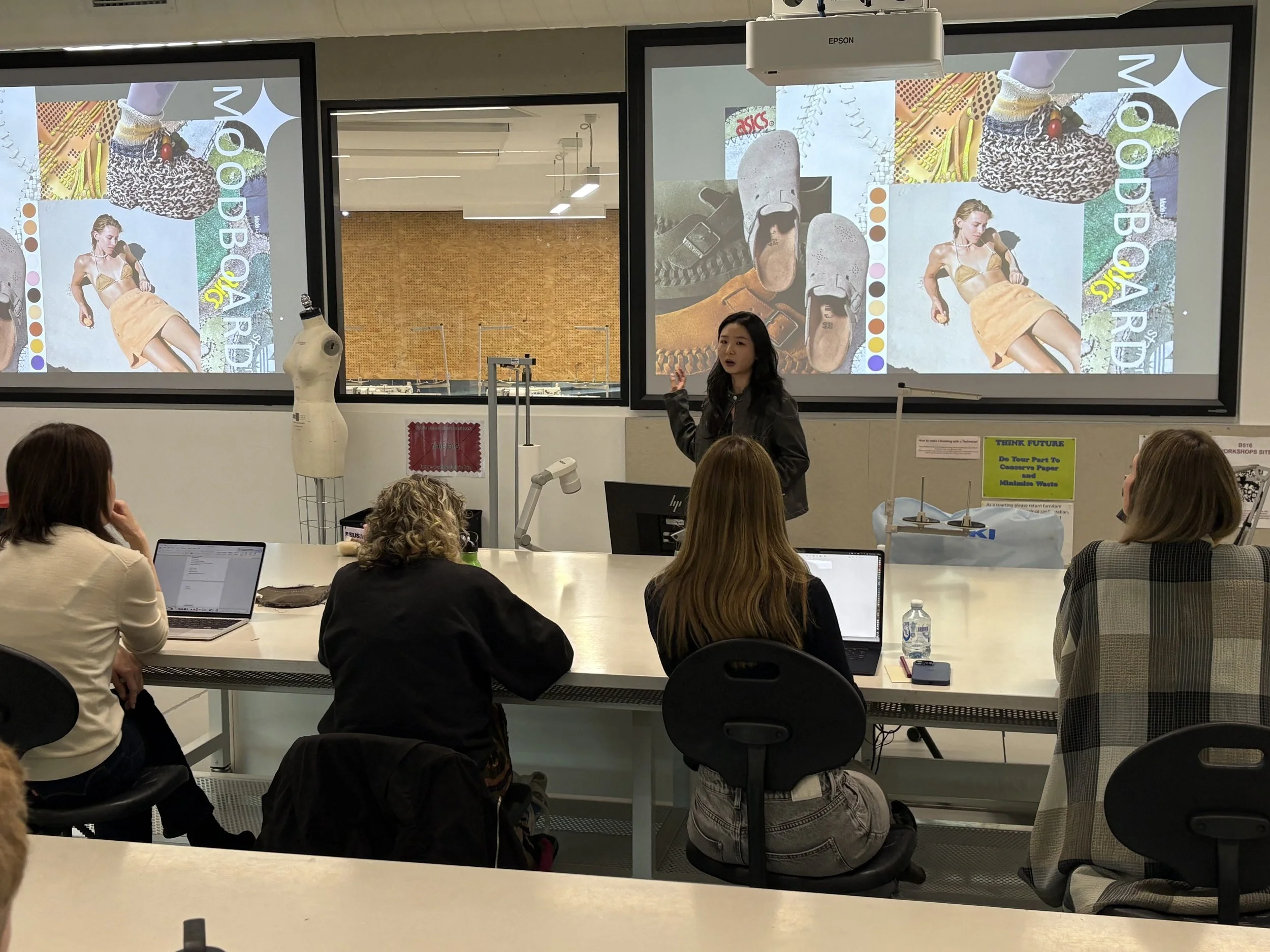
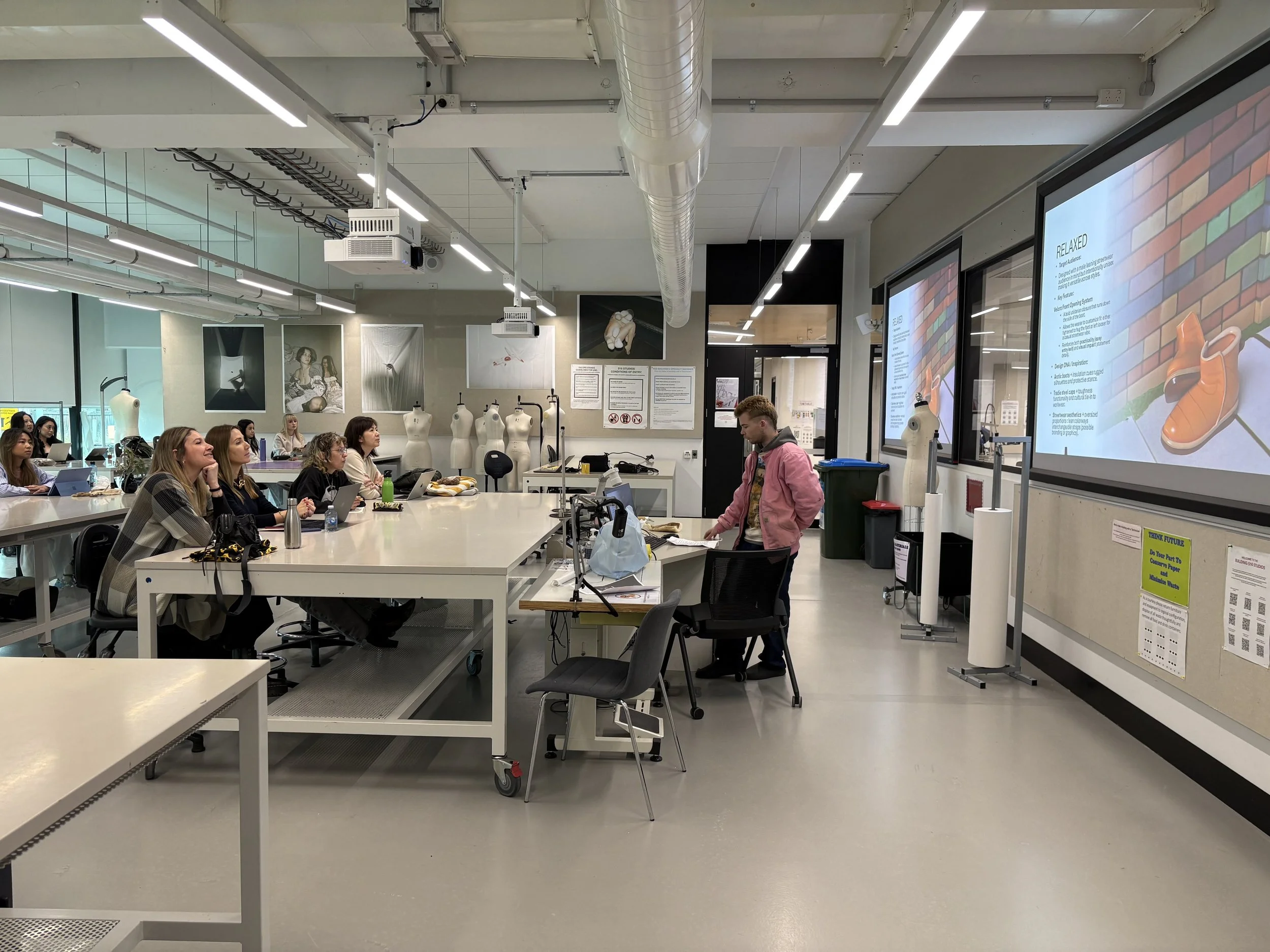
The three-way connection between teaching, industry and active research created conditions that none of us could have generated independently. EVERAU made the stakes real: students were motivated by the knowledge that they were designing for a real brand, with real market requirements and real production processes. The Bachelor of Fashion (Design) lecturers and course coordinators brought the pedagogical infrastructure of the Partnered Project, a course structure designed to prepare students for precisely these engagements. The research dimension brought intellectual depth, situating the brief within ongoing scholarly conversations about footwear, identity and material culture, and now connecting the project to a wider network of researchers and practitioners through the Footwear Research Network.
Students were not simply asked to produce something attractive made from sheepskin. They were asked to contend with questions of identity, material ethics, cultural sustainability and the meanings objects carry in people’s lives. A conversation with one student after the project ended felt particularly significant: she noted that she did not identify with the “Gen Z” label the brief’s market research had assigned to her. It was a small observation, but an important one, an illustration of the limits of consumer segmentation and a reminder of why direct engagement between brands, designers and the people they design for continues to matter.
RMIT’s triple-A pedagogy, Active, Applied and Authentic, provided the formal framework, but what gave it substance was the genuine investment of all parties involved. Industry partners who attend, listen and are willing to be surprised by what students bring. Educators who hold space for complexity. Researchers who bring current scholarship directly into the room rather than maintaining a separation between research and teaching practice.
A note on pathways
One further outcome is worth recording. The project drew students’ attention to footwear education pathways they may not have known existed. RMIT’s College of Vocational Education, on the same Brunswick campus as the Bachelor of Fashion (Design), offers a Certificate IV in Custom Made Footwear, the only higher education-affiliated program in the southern hemisphere teaching footwear making. At least one student expressed intention to pursue that qualification after completing the fashion design degree, a form of dual-sector articulation that builds a tailored and genuinely unusual and relevant skill set. Increasing awareness of these pathways as students try to find their place in the fashion industry is itself a meaningful outcome of the collaboration.
Looking forward
The sheepskin boot is a durable cultural object. Since its somewhat contentious origins in colonial settlement, it has persisted through global trademarking disputes, fashion cycles and shifting cultural attitudes to become the iconic style we now know. What this collaboration demonstrated is that the people best positioned to carry that object forward are those with a deep and embodied understanding of what it means to be ‘Australian’, and that university, industry and research partnerships are among the most effective mechanisms for developing those individuals.
I am grateful to RMIT’s School of Fashion and Textiles, particularly Dr. Tassia Joannides, Dr. Tarryn Handcock, Dr. Peter Boyd, Sang Thai and Dr. Deborah Wills-Ives, for the opportunity to lead the collaboration. I am also grateful to Lou Clifton at The Shoe School for her technical assistance and material expertise, to the team at EVERAU, particularly Tina, Vicky, Ronnie and Priscila, and to Ingrid and Tali at Agence Supreme PR for their commitment and enthusiasm for the project. Most of all, I am grateful to all the participating students, whose work and learning was the point of it all.
With almost 20 years of experience in Higher Education, I have seen the role of the lecturer shift from teaching students the ‘how’ of fashion design to helping them understand the ‘why’. Collaborations like these are essential to helping the next generation of fashion professionals find their values, purpose, place and voice in an increasingly challenging and often alienating world.
EVERAU’s response:
“As a brand, we’re always thinking about how to genuinely connect with the next generation, through the conversations with students, lecturers and researchers, it pushed us to think more deeply about how younger generations connect with identity, culture, materials, sustainability, and the meaning behind what they wear, than simply just good-looking shoes. It comes from listening, having open panel discussions, and being willing to see things from new perspectives. It’s a very special experience to be part of something that brought brand, education, and research together. For EVERAU, it reinforced our belief that Australian sheepskin footwear still has so much potential to evolve while staying connected to its cultural roots.”
Tina Dong – Marketing Manager, EVER Australia
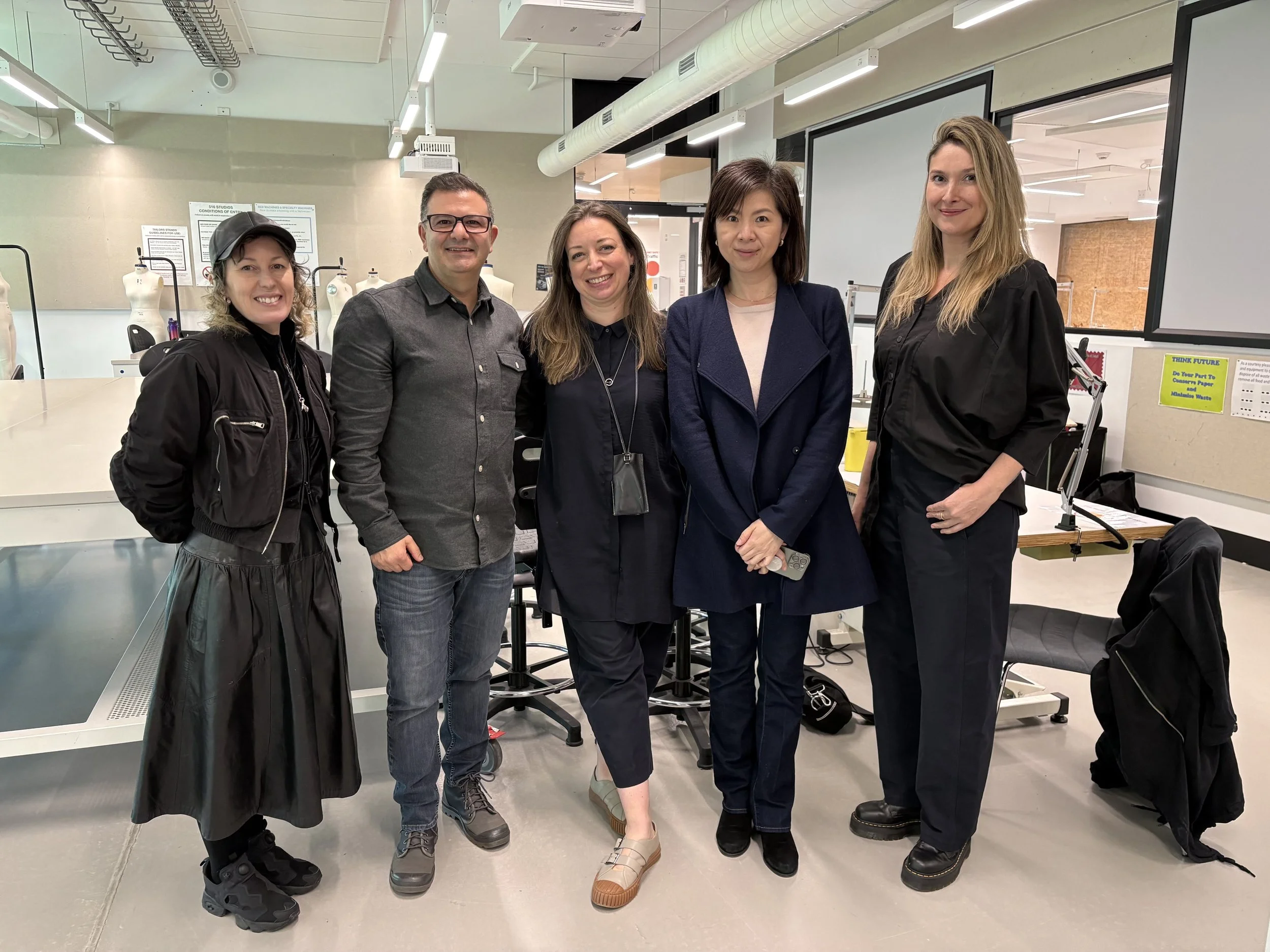
About the author
Dr Alexandra Sherlock is a sociocultural anthropologist specialising in footwear and material culture, with sixteen years of research in the field. She is a Lecturer in the Bachelor of Fashion (Design) at RMIT University’s School of Fashion and Textiles, founder of the Footwear Research Network and presenter of the Social Lives of Shoes podcast.